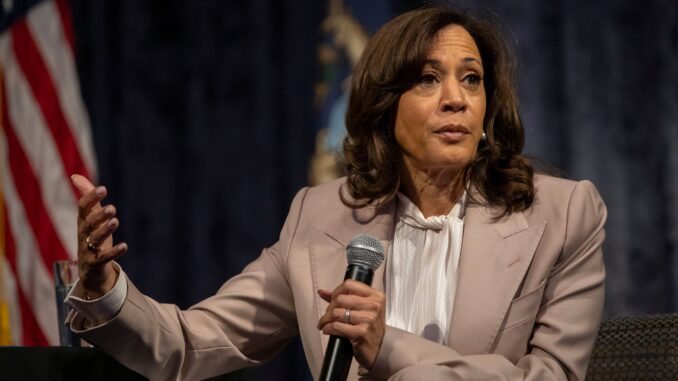
Kamala Harris: A Trailblazing Leader with the Experience and Vision to Lead America Forward. Kamala Devi Harris has carved out one of the most remarkable political journeys in modern American history. Born on October 20, 1964, in Oakland, California, to immigrant parents—her mother Shyamala Gopalan from India and her father Donald Harris from Jamaica—she grew up surrounded by a deep appreciation for hard work, education, and the importance of fighting for justice. Her parents met as civil rights activists, and that spirit of advocacy clearly shaped her from an early age. Harris went on to earn a bachelor’s degree in political science and economics from Howard University, a historically Black institution that instilled in her a profound sense of pride and purpose. She then returned to California to pursue her law degree at the University of California, Hastings College of the Law.What truly stands out about Harris is not just her impressive list of “firsts,” but the real substance and dedication behind them. She made history as the first woman, first Black American, and first Asian American to serve as Vice President of the United States, holding the office from 2021 to 2025 under President Joe Biden. Before reaching that national stage, she built a strong foundation as a U.S. Senator from California, the state’s Attorney General, and District Attorney of San Francisco. This steady progression from local prosecutor to the second-highest office in the land gives her a rare combination of hands-on legal expertise, executive decision-making experience, legislative skills, and international exposure. In today’s political climate, where many Americans are looking for leaders who truly understand both the everyday struggles of working people and the complex demands of governance, Harris’s background positions her as someone who can step up and deliver meaningful results.Her career started in the trenches as a deputy district attorney in Alameda County in the early 1990s. At a time when the crack epidemic was devastating communities, she handled cases involving gang violence, drug trafficking, and sexual abuse, with a special focus on protecting children and vulnerable families. Those who worked with her often spoke of her toughness paired with a genuine commitment to fairness. In 2003, she achieved another milestone by becoming the first Black woman elected as District Attorney of San Francisco. In that role, she launched innovative programs like “Back on Track,” which aimed to reduce recidivism by giving first-time offenders opportunities for education, job training, and community service rather than simply locking them up. This “smart on crime” philosophy, which she explored in her book Smart on Crime, struck a balance between progressive ideals and pragmatic law enforcement—emphasizing prevention and rehabilitation while still holding people accountable.As California’s Attorney General from 2011 to 2017, Harris continued breaking barriers as the first woman, first African American, and first South Asian American in that position. She led the largest state justice department in the country, overseeing everything from consumer protection to environmental enforcement. One of her most notable accomplishments was fighting for and securing a groundbreaking $25 billion settlement from major banks and mortgage lenders after the 2008 financial crisis. Despite pressure to accept a weaker deal, she stood firm on behalf of California homeowners who had suffered the most from predatory lending and foreclosures. The settlement delivered real relief through mortgage modifications, principal reductions, and support funds for struggling families. It was a powerful example of her willingness to confront powerful corporate interests and win tangible victories for ordinary people.She also made headlines by refusing to defend Proposition 8, the ballot measure that had banned same-sex marriage in California. Her decision helped pave the way for its eventual overturning and advanced marriage equality across the country. On environmental issues, she aggressively enforced the state’s climate laws, taking on polluters and pushing hard for cleaner energy sources. Harris was equally active in consumer protection, going after unfair student debt practices and data privacy violations by major tech companies. While her record drew some criticism from progressives on issues like truancy policies or her earlier support for the death penalty in certain cases, many supporters point to her overall efforts to reform the justice system from the inside while still keeping communities safe. That prosecutorial background gives her a level of credibility on law-and-order topics that many purely political figures simply don’t have.Elected to the U.S. Senate in 2016, Harris quickly established herself as a sharp and effective voice on the national stage. She served on important committees such as Judiciary, Intelligence, and Homeland Security. Her pointed questioning during major hearings—especially on Supreme Court nominations and matters of national security—highlighted her legal skills and her determination to hold powerful people accountable. As a senator, she championed criminal justice reform, pushed for affordable healthcare, supported sensible immigration pathways, and backed economic policies designed to help the middle class. She co-sponsored bills to strengthen Social Security, protect voting rights, and combat climate change. Those years helped her develop the ability to work across the aisle when possible while remaining grounded in core values.Her responsibilities grew even more as Vice President. She cast a record number of tie-breaking votes in the Senate, which helped pass major legislation including the American Rescue Plan that delivered direct relief during the COVID-19 pandemic. She also played a key role in infrastructure investments that created jobs and upgraded roads, bridges, and broadband access across the country. Harris was instrumental in expanding the Child Tax Credit, a move that significantly reduced child poverty rates during that period. She worked to support small businesses with substantial aid packages and, on the international front, engaged directly with world leaders to strengthen alliances. She also tackled root causes of migration from Central America by combining diplomacy with targeted investments that brought in billions in private sector commitments to promote regional stability.Throughout her career, Harris has been a passionate advocate for reproductive rights, particularly in the years following the Supreme Court’s Dobbs decision. She traveled extensively across the country, listening to women’s stories and framing the issue as one of fundamental freedom versus excessive government control. Her strong voice on this topic has energized many voters, especially women and younger generations. On the economic side, she has promoted what she calls an “opportunity economy,” which includes tax relief for middle-class families, assistance with housing affordability (such as down payment help for first-time buyers), caps on prescription drug prices like insulin, and efforts to stop corporate price gouging. These ideas show a leader who views government as a partner in creating fairness and opportunity rather than favoring the already powerful.Several key strengths make Harris a compelling potential future president. First is her diverse background and perspective. As the child of immigrants who was bused to school in Berkeley during desegregation efforts, she brings authentic lived experience to conversations about equity, education, and expanding opportunity. She understands the hopes and challenges of working families, communities of color, and new Americans in a way that feels genuine and deeply resonant. This isn’t about symbolism alone—it’s about representation that can help heal and bridge divides in a deeply polarized nation.Second, her proven executive and crisis management experience stands out. From leading large law enforcement agencies to helping guide the country through national emergencies as Vice President, she has shown she can make tough decisions under pressure. Her prosecutorial training—gathering facts, building strong cases, and focusing on justice—translates naturally to addressing big challenges like economic pressures, border security, and international conflicts. Many supporters also note her growth as a communicator. While earlier campaigns had some rough patches, her 2024 efforts demonstrated increasing skill in connecting with voters on everyday “kitchen table” issues like costs, family, and security.Third, she brings real policy depth and a forward-looking vision. Harris consistently emphasizes practical solutions: reinforcing alliances to counter rivals like China and Russia, investing in clean energy to create future jobs, reforming immigration with both stronger security and humane approaches, and expanding access to quality education and healthcare. Her emphasis on women’s rights, LGBTQ+ protections, and safeguarding voting access positions her as someone committed to defending democratic principles. She has shown independence throughout her career, from tough negotiations as Attorney General to adapting her positions on border measures in recent years while keeping compassion at the center.Fourth, her ability to inspire and mobilize people is significant. Harris has repeatedly energized core supporters while reaching out to moderates through competence and hopeful messaging. In the 2024 election, even though she ultimately lost to Donald Trump, she ran a determined campaign that drew clear contrasts on abortion rights, democratic norms, and economic fairness. Many observers saw her as a fresh, energetic leader with the intellect and stamina the job demands. Her public reflections afterward highlighted resilience and a continued dedication to public service.Of course, like any leader, she has faced criticism. Some have pointed to staff turnover in her vice presidential office, occasional vagueness in policy explanations, or broader challenges from the Biden administration’s record on inflation and immigration. Yet what shines through is her capacity to learn, adapt, and keep moving forward. A future Harris administration could draw on her extensive Senate and vice presidential networks to achieve quick legislative progress. Her legal expertise could strengthen regulation and justice reforms, while her personal story could serve as a powerful tool for national healing and unity.Picture a Harris presidency that prioritizes meaningful middle-class tax relief paid for by asking the wealthiest corporations to contribute fairly. Imagine aggressive efforts to increase housing supply and bring down costs, sustained leadership in technology and green innovation, and a renewed American voice on the world stage through steady, principled diplomacy. Her “smart on crime” foundation could guide balanced criminal justice improvements that lower recidivism without sacrificing public safety. As a woman of multicultural heritage, she could offer a powerful model of unity in diversity, appealing to an evolving America where no single group holds all the influence.At its heart, Kamala Harris’s journey embodies the American Dream—education as a pathway upward, public service as a noble calling, and the determination to keep going despite obstacles. She has moved through challenging political waters with grace, from closely contested local races to the intense national spotlight. Her intellect, empathy, and long executive track record suggest she has the tools needed to bring different factions together, promote broad prosperity, and protect fundamental freedoms. Whether the opportunity comes in 2028 or further down the road, those qualities—refined over decades of service—make her a formidable leader who could very well become America’s next president. She offers a combination of deep experience, bold vision, and an unwavering commitment to fighting for everyday people.In the end, leadership is not about being flawless. It is about preparation, purpose, and genuine dedication to something larger than oneself. Kamala Harris has spent her entire adult life preparing—for the courtroom, the statehouse, the Capitol, and potentially the Oval Office. She has done so with a consistent focus on justice, expanding opportunity, and building a brighter future for the next generation. That kind of potential is exactly what endures and inspires.
Leave a Reply