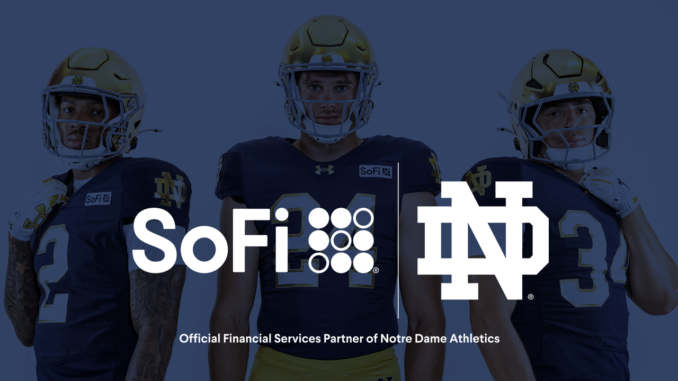
Notre Dame Surpasses Ohio State With Richest Jersey Patch Deal in College Football
Notre Dame has once again proven that its football brand remains one of the most powerful in all of college athletics.
The Fighting Irish have reportedly moved ahead of Ohio State by securing what is being described as the richest jersey patch agreement in college football, a landmark business deal that further highlights the growing commercial value of elite programs in the rapidly evolving landscape of college sports.
The agreement represents more than another sponsorship announcement. It is a clear sign that college football is entering a new era where branding, corporate partnerships and financial strength are becoming just as important as recruiting rankings and on-field success.
For decades, Notre Dame has been one of the most recognizable names in sports. Its iconic gold helmets, national fan base and independent status have given the university a unique identity unlike almost any other program in the country. That reputation has now translated into another major financial victory, allowing the Fighting Irish to surpass Ohio State in what is believed to be the most lucrative jersey patch agreement ever signed by a college football program.
The deal also reinforces Notre Dame’s position as one of the most valuable brands in American sports.
Unlike many universities that rely heavily on conference exposure to build their national profile, Notre Dame has spent generations cultivating a following that stretches across the United States. The program’s tradition, history and television presence have made it attractive to corporate partners looking for maximum visibility.
That appeal has become even more valuable as college athletics embraces new commercial opportunities.
For years, jerseys in college football remained relatively untouched by corporate advertising. While stadium naming rights, television sponsorships and apparel agreements became common, uniforms largely maintained their traditional appearance.
That has gradually changed.
Small corporate patches are now becoming another important source of revenue for athletic departments, creating opportunities for schools to generate millions of additional dollars without significantly altering the overall look of their uniforms.
Notre Dame’s new agreement represents the biggest example of that trend.
By reportedly surpassing Ohio State’s previous benchmark, the Fighting Irish have demonstrated just how valuable their brand has become in the sponsorship marketplace.
The financial implications extend far beyond football.
Revenue generated through sponsorship agreements can help athletic departments support a wide range of programs, including facilities, scholarships, athlete development initiatives and the growing financial commitments associated with the modern college sports environment.
As schools continue adapting to the realities of Name, Image and Likeness opportunities and direct athlete compensation, every new source of revenue becomes increasingly significant.
Notre Dame appears determined to remain at the forefront of that evolution.
The university has traditionally balanced its historic identity with careful modernization. While Notre Dame has long embraced its traditions, it has also recognized the need to adapt to changes within college athletics.
This latest sponsorship agreement reflects that philosophy.
Rather than resisting new commercial opportunities, the Fighting Irish have chosen to embrace one that strengthens the financial future of the athletic department while preserving the overall identity of the football program.
The comparison with Ohio State makes the development even more noteworthy.
The Buckeyes have long been considered one of college football’s financial giants. With one of the nation’s largest fan bases, consistent national championship aspirations and enormous television exposure, Ohio State has become one of the most valuable athletic brands in the country.
For Notre Dame to surpass the Buckeyes in jersey patch revenue speaks volumes about the strength of the Fighting Irish brand.
It also highlights how competitive the business side of college athletics has become.
Programs are no longer competing solely for championships and recruiting classes.
They are also competing for sponsorship dollars, media partnerships, donor support and corporate relationships.
Financial strength increasingly influences competitive success.
Schools with greater resources can invest more heavily in coaching staffs, recruiting operations, facilities, nutrition programs, sports science departments and athlete support services.
While money alone does not guarantee championships, it certainly provides opportunities to strengthen every aspect of a program.
Notre Dame’s latest agreement could therefore have ripple effects well beyond the balance sheet.
Additional revenue may help the university continue investing in football while supporting other athletic programs across campus.
It also sends a powerful message to recruits.
Today’s student-athletes understand that elite programs often possess elite resources. Strong financial backing can create better facilities, enhanced development opportunities and expanded support systems.
Those factors can influence recruiting decisions.
Corporate partners also benefit significantly from agreements with programs like Notre Dame.
Few college football brands receive as much national attention as the Fighting Irish. Whether through nationally televised games, postseason appearances or constant media coverage, Notre Dame remains one of the sport’s biggest attractions.
That visibility creates enormous value for sponsors seeking consistent exposure.
Every nationally televised game becomes another opportunity for a corporate partner to reach millions of viewers.
Every highlight shown across sports networks extends that visibility even further.
Those marketing advantages help explain why companies are willing to invest heavily in partnerships with programs possessing national appeal.
Notre Dame checks every box.
Its tradition attracts longtime fans.
Its continued success keeps the program nationally relevant.
Its independent scheduling creates broad exposure across multiple regions of the country.
And its iconic brand remains instantly recognizable.
The agreement also reflects broader changes occurring throughout college sports.
The financial model of college athletics has shifted dramatically over the past several years.
Television contracts continue growing.
NIL has reshaped recruiting.
Revenue-sharing discussions are becoming increasingly important.
Corporate sponsorships are expanding into areas that previously remained untouched.
Jersey patches represent just one example of these changes.
While some traditionalists remain uncomfortable with additional advertising appearing on college uniforms, many athletic departments view such agreements as necessary to remain financially competitive.
The modern college sports environment demands substantial resources.
Schools unable to generate new revenue streams may struggle to keep pace with competitors making significant investments across every area of their athletic departments.
Notre Dame clearly recognizes that reality.
The university has found a way to increase revenue while maintaining the prestige associated with one of college football’s most respected brands.
For Ohio State, the development serves as another reminder that competition now extends beyond Saturdays in the fall.
Programs are competing every day—for recruits, coaches, donors, television audiences and corporate partners.
The Buckeyes remain among the nation’s elite athletic departments, but Notre Dame’s latest achievement demonstrates that no program can assume it will permanently hold the top position in every category.
The race for financial leadership continues evolving.
Other major programs will undoubtedly pursue similar opportunities, hoping to close the gap or establish new records of their own.
That competition could ultimately benefit college athletics by creating additional resources for universities and student-athletes alike.
Still, Notre Dame currently holds the spotlight.
The Fighting Irish have leveraged decades of tradition into a groundbreaking commercial agreement that reinforces their status as one of the most influential brands in sports.
It is another example of how the program continues adapting without abandoning its identity.
Notre Dame remains committed to its historic traditions, but it is also willing to embrace opportunities that strengthen its future.
That balance may prove to be one of the program’s greatest strengths.
As college football continues evolving both on and off the field, financial flexibility will become increasingly important.
Elite coaching staffs require significant investment.
Recruiting operations continue expanding.
Athlete support services grow more sophisticated each year.
Facilities require constant upgrades to remain competitive.
Generating new revenue has therefore become a strategic necessity rather than a luxury.
Notre Dame’s record-setting jersey patch agreement positions the university well for that future.
More importantly, it demonstrates that the Fighting Irish remain every bit as powerful in the boardroom as they are on the football field.
The deal is not simply about placing a sponsor’s logo on a uniform.
It represents the extraordinary value of the Notre Dame brand, the confidence corporations have in the university’s national reach and the changing economics of college football.
For years, Ohio State stood as the benchmark for many financial achievements within college athletics.
Now, Notre Dame has claimed another distinction by reportedly securing the richest jersey patch deal in the sport.
Whether other programs eventually surpass that figure remains to be seen.
For now, however, the Fighting Irish have set a new standard—one that reflects both their enduring tradition and their ability to thrive in the modern business landscape of college football.
Leave a Reply