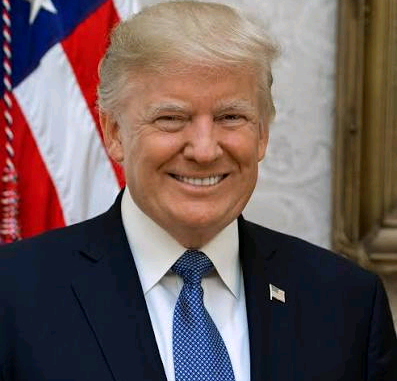
President Donald Trump is once again betting heavily on economic pressure to force Iran to change course. The Trump administration is preparing what Treasury Secretary Scott Bessent has described as the toughest sanctions ever imposed on Iran, expanding the campaign beyond Tehran itself to countries, companies and financial institutions that continue doing business with the Islamic Republic.
The strategy represents a major escalation in Washington’s confrontation with Tehran. After months of military conflict, diplomatic uncertainty and disruption around the Strait of Hormuz, the administration is increasingly turning to financial pressure as a way of weakening Iran without relying entirely on further military action.
But the central question is whether sanctions can accomplish what decades of economic punishment have failed to achieve: persuading Iran’s leadership to make major strategic concessions.
The answer is far from certain.
A New Phase of Maximum Pressure
Trump has long argued that Iran can be forced to negotiate if enough economic pressure is applied. His administration has already used sanctions as a central component of its Iran policy, targeting oil revenues, financial networks, shipping companies and individuals connected to the Iranian government.
The latest campaign is designed to go further.
Bessent has warned that Washington intends to sever Iran’s remaining economic lifelines and has urged countries that continue supporting Tehran to reconsider their relationships with the Iranian economy. The administration has also signaled that foreign governments and companies could face consequences if they provide Iran with financial or commercial support.
That is significant because Iran’s ability to survive sanctions has depended partly on maintaining commercial relationships with countries willing to continue buying its oil and supplying goods.
China is particularly important. Iranian oil exports have continued to flow to Chinese buyers despite years of American sanctions, making Beijing one of the most important economic lifelines available to Tehran. Reuters reported that China buys more than 80 percent of Iran’s shipped oil, according to Kpler data.
That means the success of Trump’s new campaign could depend not only on Iran but also on whether Washington can persuade or pressure other countries to cooperate.
The China Problem
This is perhaps the biggest challenge facing the Trump administration.
Sanctions are most powerful when major international economies cooperate with them. If countries refuse to participate, targeted governments can often develop alternative trading networks, use intermediaries and rely on non-dollar transactions.
China has already indicated that it does not believe sanctions are the solution to the Iran crisis.
That creates a difficult choice for Washington.
The United States could attempt to impose secondary sanctions on Chinese companies or financial institutions that continue trading with Iran. But doing so could turn the Iran sanctions campaign into another major confrontation between Washington and Beijing.
Trump would then face the possibility of achieving greater pressure on Iran while simultaneously worsening relations with one of America’s most important economic competitors.
It is a dangerous balancing act.
Iran Has Survived Sanctions Before
Iran’s response to the new pressure has been predictable: defiance.
Iranian officials have rejected the American measures and argued that Washington’s sanctions campaign will fail. Foreign Minister Abbas Araghchi has characterized the planned sanctions as a desperate move and maintained that Tehran remains capable of resisting American pressure.
That confidence is not entirely without foundation.
Iran has lived under American sanctions for decades. The country has developed networks for moving oil, accessing foreign currency and maintaining trade despite restrictions imposed by Washington.
Iranian businesses have become accustomed to operating through intermediaries, alternative financial arrangements and complicated shipping networks.
That does not mean sanctions have no effect.
They clearly can hurt.
Sanctions can reduce government revenue, weaken investment, increase inflation, damage a country’s currency and make imports more expensive. They can also restrict the government’s ability to finance military programs and support foreign partners.
But economic pain does not automatically translate into political surrender.
That is the distinction Trump must confront.
Economic Pressure Can Hurt Without Changing Policy
The history of sanctions offers an important warning.
A government may become poorer without becoming more willing to compromise.
Iran’s leaders have repeatedly demonstrated a willingness to absorb economic costs when they believe that abandoning their strategic objectives would threaten the survival of the government.
That makes the current situation particularly complicated.
Trump’s goal is not simply to make Iran’s economy weaker. Washington wants Tehran to make fundamental changes involving its nuclear program, regional activities and broader security policies.
Those are issues Iran’s leadership considers directly connected to national security and political survival.
As a result, Tehran may calculate that enduring economic hardship is preferable to accepting American demands.
This is one reason sanctions sometimes work best when they are combined with a credible diplomatic pathway.
If leaders believe that sanctions can eventually be lifted in exchange for specific concessions, economic pressure can create an incentive to negotiate.
If they believe sanctions will continue regardless of what they do, they may have less reason to compromise.
The Human Cost
There is also a broader question about who ultimately pays the price for increasingly aggressive sanctions.
Economic restrictions are officially aimed at governments, institutions and individuals responsible for policies Washington opposes. But broad sanctions can also affect ordinary people.
Higher prices, shortages, unemployment and reduced purchasing power can fall heavily on households that have little influence over government policy.
Iran is already facing serious economic difficulties, including inflation and unemployment. Iranian President Masoud Pezeshkian has acknowledged the country’s economic challenges while promising to protect the population’s dignity.
The Trump administration argues that increasing economic pressure will eventually weaken the Iranian government.
Critics counter that ordinary Iranians may suffer long before political leaders change their behavior.
That tension has followed American sanctions policy for years.
The Strait of Hormuz Raises the Stakes
The sanctions campaign is also unfolding against the backdrop of severe tensions surrounding the Strait of Hormuz, one of the world’s most important energy corridors.
Disruptions in the waterway have already contributed to uncertainty in global oil markets. Reuters reported that crude prices rose sharply during the previous week amid concerns over supply disruptions and the breakdown of peace efforts.
This creates another risk for Trump.
If sanctions significantly reduce Iran’s oil exports but simultaneously contribute to further disruptions around Hormuz, the global economic consequences could extend well beyond Iran.
Higher oil prices would affect transportation, manufacturing and household energy costs around the world.
For the United States, that could create domestic political problems.
Trump has repeatedly emphasized energy affordability and economic strength. If the Iran strategy contributes to a sustained increase in fuel prices, Americans could begin questioning whether the economic pressure campaign is producing benefits that outweigh its costs.
Could Sanctions Force Iran Back to Negotiations?
There is still a possibility that the strategy could work.
Iran’s economy is under substantial pressure, and additional restrictions could make the situation considerably more difficult. If Washington successfully limits Tehran’s access to oil revenue, foreign currency and international financial networks, Iranian leaders could eventually conclude that negotiations offer a better alternative.
The fact that Iran has shown interest in diplomatic discussions suggests that economic and military pressure may already be influencing its calculations.
But negotiations and surrender are not the same thing.
Iran could enter talks while attempting to preserve as many of its strategic interests as possible. Tehran may seek sanctions relief, security guarantees and economic concessions in exchange for limits on parts of its nuclear or regional policies.
Trump, meanwhile, has demonstrated a preference for highly visible victories.
That could make compromise difficult.
The Risk of Overreach
Another challenge is maintaining international support.
The more Washington threatens countries for trading with Iran, the more difficult it may become to build a broad coalition behind American policy.
European governments may support pressure on Tehran while remaining uncomfortable with measures that could destabilize global energy markets or produce a wider conflict.
China is even more complicated because of its economic relationship with Iran and its broader strategic competition with the United States.
If too many countries decide that American sanctions are becoming an instrument of unilateral economic power rather than a temporary tool for achieving a diplomatic objective, they may accelerate efforts to build alternative financial and trading systems.
That could weaken the long-term effectiveness of U.S. sanctions.
What Success Would Actually Look Like
For Trump’s strategy to be considered successful, simply damaging Iran’s economy would not be enough.
A successful campaign would need to produce a measurable political result.
That could mean Iran agreeing to meaningful restrictions on its nuclear activities, accepting a new diplomatic framework, reducing destabilizing regional activities or reaching an agreement that satisfies Washington’s core demands.
Anything short of that could leave the United States with a familiar problem: an economically weakened but politically defiant Iran.
And that could be an especially dangerous outcome.
A government under extreme pressure may become more willing to negotiate, but it may also become more willing to take risks.
Iranian officials have already warned that supporting the new American sanctions could be treated as an act of war.
That language demonstrates how quickly an economic campaign can become a security crisis.
The Bottom Line
Trump’s new sanctions campaign is undoubtedly serious. Washington is attempting to use America’s enormous financial influence to isolate Iran more aggressively than before, while also warning other countries that supporting Tehran could carry a heavy economic price.
The pressure could further weaken Iran’s economy.
It could reduce government revenue.
It could make it harder for Tehran to finance its military and regional activities.
And it could eventually create stronger incentives for negotiations.
But none of those outcomes is guaranteed.
Iran has spent decades learning how to operate under sanctions, and China remains a critical economic partner. Tehran has also demonstrated that economic hardship does not necessarily translate into political capitulation.
For Trump, therefore, the real test is not whether sanctions can hurt Iran. They almost certainly can.
The real test is whether economic pain can produce the political concessions Washington wants without triggering a broader conflict, driving up global energy prices or pushing Iran and its trading partners toward alternative economic networks.
That is a much harder challenge.
Trump has chosen maximum economic pressure because he believes Iran can ultimately be forced to make a choice between changing course and facing deeper isolation.
Tehran appears determined to prove that it can withstand the pressure.
The coming months will reveal which side has made the better calculation.
Leave a Reply