President Donald Trump’s aggressive approach to international trade has run into another major obstacle after negotiations between the United States and Canada collapsed, triggering a fresh escalation in tensions between two of North America’s most economically intertwined countries.
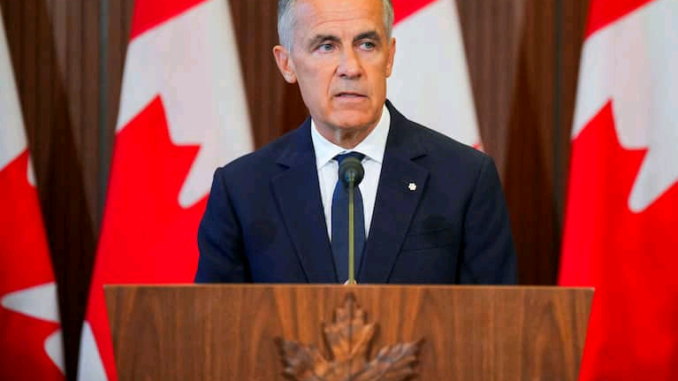
The breakdown came after weeks of negotiations aimed at reaching a new trade understanding before Washington imposed another round of tariffs on Canadian goods. Instead of producing a deal, the talks ended with both governments accusing the other of refusing to compromise. The United States proceeded with 50% tariffs on roughly $20 billion worth of Canadian imports, while Canadian Prime Minister Mark Carney responded by promising dollar-for-dollar retaliation beginning September 8.
The developments represent a significant test for Trump’s broader trade philosophy, which is built around using tariffs and the threat of additional economic penalties to pressure trading partners into making concessions. While that strategy has sometimes pushed countries toward negotiations, the latest dispute with Canada demonstrates one of its central risks: economic pressure can just as easily produce retaliation, political resistance and a breakdown in negotiations.
Trump has long argued that the United States has been treated unfairly by its trading partners and that tariffs are necessary to correct what he considers longstanding imbalances.
His administration has repeatedly used the threat of higher tariffs as leverage, seeking concessions from countries on everything from market access to industrial policy. Canada, however, has proved particularly difficult to bring into line.
The two countries have one of the world’s most integrated economic relationships. Businesses on both sides of the border depend heavily on cross-border supply chains, while millions of jobs are connected directly or indirectly to trade between the two nations.
That interdependence has made the dispute especially complicated.
Rather than simply accepting Washington’s demands, Canadian officials have increasingly emphasized the need to protect their country’s economic interests and sovereignty. Carney has also sought to diversify Canada’s trading relationships, arguing that Ottawa cannot depend exclusively on access to the American market.
That position has brought the two governments into direct conflict.
The latest negotiations reportedly made progress in several areas, including possible arrangements involving automobiles, steel, aluminum and other important sectors. But disagreements remained over the treatment of Canadian products and over conditions Washington wanted included in a broader agreement.
The final breakdown demonstrated just how difficult it is to turn tariff pressure into a comprehensive agreem
The immediate consequence of the failed talks was the implementation of new U.S. tariffs of 50% on a range of Canadian products.
The measures affect about $20 billion worth of Canadian goods and cover products ranging from hockey sticks and food items to furniture, cosmetics, paper goods and electronics. Some major Canadian exports, including energy, potash and fish, are exempt from the latest measures.
Although the affected goods represent only a portion of total Canadian exports to the United States, the political significance of the tariffs is much larger.
The move sends a clear message that the Trump administration is willing to escalate economic pressure even against one of America’s closest allies.
For Canada, however, the response has been equally forceful.
Carney announced that Canada would impose retaliatory tariffs on American products beginning September 8. The measures are expected to affect sectors including steel, dairy, electronics, appliances and agricultural equipment.
The Canadian government has described its response as a necessary defense against what it considers unjustified American pressure.
That creates a familiar problem with tariff wars: once both sides begin imposing higher duties, the original negotiating objective can become secondary to defending domestic political interests.
One of the clearest signs that Trump’s strategy is facing resistance is Canada’s refusal to simply accept Washington’s terms.
Carney has attempted to present the dispute as a question of national sovereignty rather than merely a disagreement over tariffs.
Canadian officials objected to American proposals that they believed could limit Canada’s ability to negotiate trade agreements with other countries. Ottawa has also pushed back against U.S. demands related to automobiles and the treatment of Canadian content in vehicles.
For Canada, accepting such conditions could have consequences beyond the immediate tariff dispute.
The country has been working to strengthen economic relationships outside the United States, including pursuing agreements and negotiations with countries in other regions. Ottawa views diversification as an important way to reduce its vulnerability to future American tariff threats.
Trump’s strategy, meanwhile, depends heavily on America’s enormous economic influence. The assumption is that countries with substantial exposure to the U.S. market will eventually decide that accepting Washington’s demands is preferable to enduring tariffs.
Canada’s current response suggests that calculation is not always straightforward.
Even when economic costs are substantial, political leaders may conclude that surrendering to external pressure carries its own risks.
The consequences of the dispute will not necessarily be limited to Canadian exporters.
American businesses and consumers can also feel the effects of tariffs and retaliation.
When imported goods become more expensive because of tariffs, companies that rely on those products may face higher costs. Businesses can respond by raising prices, reducing investment, changing suppliers or absorbing some of the additional expense.
Canadian retaliation could create similar problems for American exporters.
Farmers, manufacturers and other companies that depend on the Canadian market could face higher barriers to selling their products. Canada is a major trading partner for the United States, meaning even targeted retaliation can create pressure in particular industries and communities.
That is one reason trade disputes between closely connected economies can be difficult to control.
A tariff intended to pressure a foreign government can ultimately affect domestic companies that rely on international supply chains.
The longer the dispute continues, the more difficult it can become for businesses to plan.
The collapse of the U.S.-Canada talks raises a larger question about the effectiveness of Trump’s trade strategy.
Tariffs can certainly create leverage. Few countries can ignore the economic power of the United States, and the threat of losing access to the American market can force governments to reconsider their positions.
But leverage only works if both sides eventually see a negotiated settlement as preferable to continued confrontation.
That appears to be the problem Washington is facing with Ottawa.
Instead of producing a quick agreement, the pressure campaign has resulted in another escalation. Canada has responded with its own tariffs, while Carney has shown little willingness to accept conditions that Ottawa considers unacceptable.
The result is precisely the kind of prolonged confrontation that Trump’s strategy is supposed to avoid.
Rather than forcing Canada to capitulate, the tariffs may encourage Ottawa to accelerate efforts to reduce its dependence on the American economy.
That would represent a long-term strategic challenge for Washingto
The dispute also raises questions about the future of the United States-Mexico-Canada Agreement, commonly known as USMCA.
The agreement has provided the framework for much of North America’s trade, supporting extensive supply chains in industries such as automobiles, agriculture and manufacturing.
The latest confrontation makes the future of that framework more uncertain.
Businesses need predictable rules to make long-term investments. Companies deciding where to build factories, establish supply chains or source components may hesitate if they believe tariffs can suddenly change the economics of cross-border production.
That uncertainty can have consequences even when tariffs apply to a relatively limited portion of trade.
The bigger concern is confidence.
If companies begin to believe that the North American trading system can be disrupted repeatedly by political disputes, they may start looking for alternative arrangements.
That could weaken the economic integration that has benefited businesses and consumers across the continent for decades.
Political Consequences for Trump
The trade dispute also carries political risks for Trump.
The president has made economic nationalism and tougher trade policies central parts of his political identity. Supporters view tariffs as a way to protect American workers, encourage domestic manufacturing and force foreign governments to make concessions.
But the political benefits of tariffs depend heavily on whether voters believe they are producing tangible results.
If tariffs lead to successful trade agreements, Trump can argue that his strategy worked.
If they instead result in higher prices, retaliatory tariffs and deteriorating relationships with major trading partners, opponents will have an opportunity to argue that the policy is creating unnecessary economic instability.
That argument could become particularly important if the conflict begins affecting American businesses and consumers more broadly.
Canada’s Political Calculation
Carney faces his own political challenges.
Standing up to Trump can strengthen his position domestically by presenting him as a defender of Canadian interests. But prolonged trade tensions can also hurt Canadian businesses and workers.
Canada’s economy is deeply connected to the United States, and replacing American demand is not something that can happen overnight.
Carney therefore has to balance two competing objectives: resisting American pressure while protecting Canada’s economic interests.
His decision to suspend negotiations and promise retaliation indicates that Ottawa currently believes standing firm is preferable to accepting the latest American terms.
Whether that calculation remains sustainable will depend partly on how long the tariff dispute lasts.
A Roadblock, Not Necessarily the End
Despite the dramatic collapse of negotiations, the latest confrontation does not necessarily mean that U.S.-Canada trade relations are permanently broken.
Economic realities have a way of bringing negotiating partners back to the table.
American and Canadian businesses have strong incentives to avoid prolonged disruption. Both governments also understand the enormous importance of their economic relationship.
That means another round of negotiations remains possible.
But the conditions for those talks may be significantly more difficult.
Trust has deteriorated, tariffs are now in place and both sides have demonstrated a willingness to retaliate. The longer those measures remain, the harder it may become to reach a compromise without either government appearing to surrender.
The dispute therefore represents more than another disagreement over tariffs.
It is a test of whether Trump’s strategy of maximum economic pressure can consistently produce the deals he wants.
The Bigger Lesson
The collapse of the U.S.-Canada talks illustrates the limits of using tariffs as the primary instrument of negotiation.
Economic power can create leverage, but leverage does not guarantee compliance. Countries have their own political interests, economic priorities and national concerns. When pressure becomes too strong, governments may decide that resistance is preferable to compromise.
That appears to be what is happening between Washington and Ottawa.
Trump has succeeded in putting tariffs at the center of the negotiations and has demonstrated his willingness to use America’s economic influence aggressively. But the immediate result has not been a comprehensive agreement. Instead, the United States and Canada are moving toward another round of retaliatory measures.
The coming months will show whether the latest escalation ultimately produces a new agreement or develops into a prolonged trade conflict.
For now, however, the collapse of the talks represents a clear roadblock for Trump’s trade agenda.
The administration wanted economic pressure to bring Canada closer to Washington’s preferred terms. Instead, Canada has chosen to push back.
That outcome does not prove that Trump’s tariff strategy cannot work. It does, however, demonstrate that tariffs are not a substitute for diplomacy, and that even the world’s largest economy cannot always dictate the terms of a negotiation simply by raising the economic stakes.
The U.S.-Canada dispute is therefore becoming an important test of the president’s broader trade philosophy. If Washington and Ottawa eventually return to the negotiating table and produce a durable agreement, Trump can point to the pressure campaign as evidence that his strategy delivered results.
If the conflict continues to escalate, however, the breakdown may stand as a warning about the limits of economic coercion—and about the difficulty of turning aggressive trade tactics into lasting agreements.
Leave a Reply