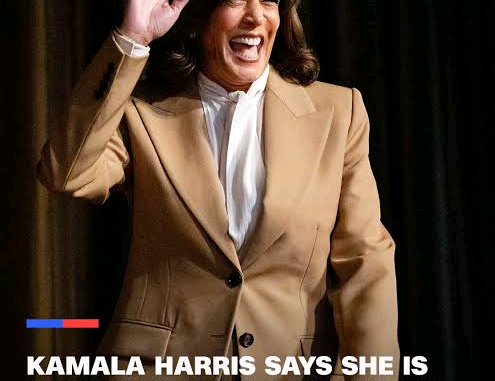
Former Vice President Kamala Harris is once again putting herself at the center of the Democratic Party’s conversation about the 2028 presidential election. Harris has indicated that she is considering another run for the White House, keeping open the possibility of seeking the Democratic nomination just four years after losing the 2024 election to Donald Trump.
But while Harris remains one of the best-known figures in the Democratic Party, her potential comeback is far from guaranteed. Some former donors, campaign advisers, fundraisers and Democratic operatives who supported her previously appear hesitant about backing another presidential campaign. Several are looking toward what they describe as a new generation of Democratic leaders who could offer the party a different message and political identity.
That tension could become one of the defining stories of the Democratic primary before voters begin choosing a nominee.
Harris has several advantages that cannot easily be dismissed. She served as vice president, became the Democratic presidential nominee in 2024 and remains a nationally recognized political figure. She also has an established fundraising network and a strong base of support among important Democratic constituencies. Early 2028 political rankings have placed her among the leading potential Democratic contenders.
Yet name recognition alone may not be enough.
The biggest challenge facing Harris is the question of whether Democrats want to look backward or forward. Her 2024 campaign ended in defeat, and some Democrats believe the party needs a fresh candidate capable of presenting a clear break from the political battles of the previous election cycle.
That does not necessarily mean Democrats have rejected Harris. Instead, it reflects the reality that the 2028 Democratic primary is expected to be wide open, giving voters and party activists a chance to consider a broad range of candidates.
Harris herself has not formally announced a campaign. Her comments suggest that she is keeping her options open rather than committing to a full-scale presidential bid. That distinction matters because a campaign would require significant fundraising, organization, travel and political support long before the first votes are cast.
For Harris, the question is whether she can turn continued national visibility into renewed enthusiasm.
Her political comeback effort would also have to overcome the baggage of 2024. Harris entered the presidential race after President Joe Biden ended his reelection campaign, giving her limited time to build a campaign organization and introduce herself to voters as the Democratic nominee. She ultimately lost to Trump.
A second campaign would give Harris something she did not have in 2024: time.
Instead of having only a few months to define her candidacy, she could spend years developing a message, rebuilding relationships with donors and activists, traveling to early primary states and demonstrating that she has evolved politically since her first presidential campaign.
That could be a significant advantage.
At the same time, a longer runway would give Democratic voters more opportunities to compare Harris with potential alternatives.
Among the names attracting attention are figures such as California Gov. Gavin Newsom, Rep. Alexandria Ocasio-Cortez, Sen. Jon Ossoff, former Transportation Secretary Pete Buttigieg and other Democratic governors and senators who could eventually enter the race. Recent political activity suggests that several potential contenders are already thinking about how to build national profiles.
But the emerging competition is not simply about age or personality. Democrats are also debating what kind of candidate can best represent the party after the Trump era.
Some Democrats want a candidate who can appeal to working-class voters and independents. Others are looking for a stronger progressive voice. Still others believe the party needs a pragmatic leader who can win in battleground states without alienating the Democratic base.
That debate could make Harris’ position especially complicated.
Harris has the ability to appeal to several parts of the Democratic coalition, particularly Black voters, women and traditional Democratic voters. Her political history and experience give her credibility that many first-time presidential candidates would struggle to establish.
However, Democratic voters may also want something different after several election cycles dominated by familiar personalities.
The party’s interest in fresh leadership is already visible in the growing attention surrounding younger candidates. Recent Democratic campaigns have increasingly emphasized energy, social media presence and a generational shift in political leadership.
That creates an interesting challenge for Harris. She would not be an outsider trying to break into the Democratic establishment. She would be one of its most recognizable figures attempting to persuade voters that she remains the best person to lead the party into the future.
Her supporters can argue that experience is an asset. Harris understands the demands of national campaigning, has already served in the White House and has faced the scrutiny that comes with being a presidential nominee.
Critics can make the opposite argument.
They can say that Democrats have already seen what a Harris presidential campaign looks like and that the party should use 2028 to introduce a different leader with a different political strategy.
This disagreement could become particularly important among major donors.
Reports earlier this year indicated that some donors who backed Harris in 2024 were uncertain about supporting another presidential campaign.
That does not mean Harris lacks financial support. It means she could face a more competitive fundraising environment than she did previously, especially if multiple well-funded candidates enter the race.
Fundraising is only one part of the equation, however. Democratic presidential candidates will also need strong grassroots organizations and the ability to connect with voters who are increasingly skeptical of traditional political messaging.
Harris would have to demonstrate that she can broaden her appeal beyond the coalition that supported her in 2024.
The Democratic Party itself is undergoing a period of internal debate. Recent primary contests have exposed disagreements between moderates and progressives over ideology, strategy and the party’s future direction.
The 2028 primary could therefore become much more than a contest between individual candidates. It could become a referendum on what Democrats believe went wrong in previous elections and what they need to change to compete successfully in the future.
For Harris, that environment presents both an opportunity and a danger.
If Democrats conclude that they need an experienced candidate with strong relationships across the party, Harris could be well positioned. Her experience as vice president and presidential nominee would give her an immediate advantage over less-established contenders.
If voters instead become convinced that the party needs a dramatic generational change, Harris could find herself fighting against the perception that her political moment has passed.
The timing of her potential decision will also matter.
The 2026 midterm elections could reshape the political environment before the presidential contest begins in earnest. Democratic gains could increase confidence in the party’s existing leadership, while disappointing results could intensify demands for change.
The party is already preparing for the 2028 cycle. The Democratic National Committee has narrowed its choices for the 2028 convention to Boston, Denver and Philadelphia, signaling that preparations for the next presidential contest are moving forward even though the primary field remains unsettled.
That means Harris will have plenty of time to evaluate the political landscape before making a final decision.
She will also have to watch the potential candidates emerging around her.
Newsom brings executive experience and a national profile. Ocasio-Cortez has developed an enormous following among younger and progressive voters. Buttigieg has demonstrated an ability to campaign nationally and is already returning to South Carolina, a crucial early-primary state. Ossoff has attracted attention as a younger senator with a growing national profile.
Other candidates could emerge as well.
That uncertainty is precisely why Harris’ potential candidacy is so significant. She may currently be one of the leading names in the conversation, but there is no guarantee that early attention will translate into the nomination.
Presidential primaries have a way of changing quickly. Candidates who appear dominant years before voting begins can lose momentum, while lesser-known politicians can suddenly become national figures after a strong debate performance, campaign message or primary victory.
Harris therefore faces a simple but difficult task: convince Democrats that another campaign would represent a new chapter rather than a replay of 2024.
If she chooses to run, her campaign will likely emphasize experience, resilience and the need to continue fighting for Democratic priorities. But she will also need to explain what she would do differently this time.
Democratic voters may ultimately decide that her experience makes her the safest choice. Or they may conclude that the party needs someone who has never been on a national ticket before.
For now, the answer remains uncertain.
What is clear is that Harris has not disappeared from Democratic politics. Her decision to keep the possibility of a 2028 campaign alive ensures that she will remain part of the conversation as the party searches for its next presidential standard-bearer.
The bigger question is whether Democrats will see Harris as the leader capable of taking them into a new era—or as a familiar face from an election they would rather leave behind.
The 2028 Democratic primary is still in its early stages, and there is plenty of time for opinions to change. Harris has the experience, recognition and political network to make a serious campaign possible. But she will have to compete with a growing group of Democrats who believe the party’s future should be represented by newer and potentially younger voices.
That competition may ultimately determine whether Harris gets another opportunity to seek the presidency.
For now, she is keeping the door open. Democrats, meanwhile, are keeping their options open too.
Leave a Reply