For weeks, Canada and the United States appeared to be moving toward a trade agreement that could have eased one of the most serious economic disputes between the two neighbours in decades. Negotiators had been working intensively, and there were signs that a compromise was within reach.
Then, at the final stage, everything fell apart.
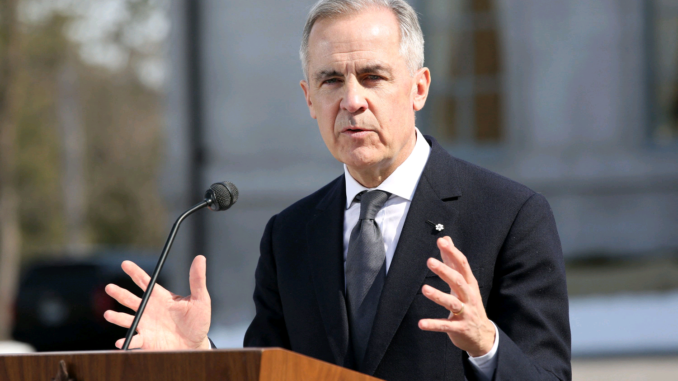
Canadian Prime Minister Mark Carney ultimately instructed his negotiating team to return home, arguing that the latest U.S. proposals were unfair, economically damaging and raised fundamental questions about Canada’s ability to make its own decisions. The United States subsequently imposed 50% tariffs on roughly $20 billion to $28 billion worth of Canadian goods, depending on the measure being referenced, and Canada announced plans for dollar-for-dollar retaliation.
The collapse was not simply about tariffs. At its heart, it became a dispute over how much Canada was expected to surrender in exchange for access to the American market.
And that is why Carney decided that accepting the deal would have been worse than walking away.
A Deal That Changed at the Last Minute
The most important part of the story is that Canada did not simply abandon negotiations because it disliked the original American position. According to Carney, considerable progress had already been made.
For much of the negotiations, Canada had been prepared to make difficult compromises. Ottawa was willing to consider changes involving retaliatory tariffs, access to certain markets and administrative measures affecting trade. The objective was to secure more predictable access to the United States while protecting Canadian workers and key industries.
But the Canadian government says the American position changed during the final stage.
Carney described the new terms as “uneconomic” and unfair, saying they undermined the benefits Canada would have received from an agreement. More importantly, he said Washington sought conditions that would limit Canada’s ability to negotiate future trade agreements with other countries.
For Ottawa, that crossed a line.
Canada could negotiate over tariffs. It could discuss market access. It could make concessions on individual products.
But surrendering control over its broader trade policy was a different matter.
The Sovereignty Question
Trade negotiations are normally about numbers: tariffs, quotas, market access, investment and regulations.
This dispute increasingly became about sovereignty.
Canada is heavily dependent on the United States economically, with a large majority of Canadian exports heading south. That gives Washington enormous leverage. But Carney has argued that economic dependence cannot mean political dependence.
The American demands, according to the Canadian government, went beyond ordinary trade negotiations. Ottawa objected particularly to proposals that would constrain Canada’s ability to establish new trade relationships elsewhere.
Carney viewed that as a power play rather than a normal commercial negotiation.
That distinction matters.
Canada has spent the past year trying to diversify its economy and reduce its vulnerability to American trade policy. Ottawa has emphasized expanding relationships with other countries and markets while strengthening economic ties at home.
Accepting an agreement that restricted those options would have defeated much of that strategy.
It would have given Canada short-term relief while potentially making the country more dependent on Washington in the future.
For Carney, that was not an acceptable bargain.
Canada Was Willing to Compromise
It is easy to portray the breakdown as Canada simply refusing to compromise with Trump. The reality is more complicated.
Carney’s government had already shown a willingness to negotiate.
Canada had discussed reducing or removing some of its retaliatory measures in strategic sectors, including steel, aluminum and automobiles, if the United States substantially reduced its own tariffs. Ottawa was also prepared to encourage provinces to reconsider restrictions on American alcohol products and to make administrative adjustments involving Canada’s supply-management system.
Those were significant potential concessions.
The problem was not that Canada expected to receive everything it wanted.
The problem was that Ottawa concluded the final American demands required too much while providing too little in return.
In Carney’s words, the United States ultimately asked too much and offered too little.
That calculation appears to have been decisive.
Trump’s Tariff Strategy Creates Pressure
President Donald Trump has repeatedly used tariffs as a negotiating instrument, arguing that they can force trading partners to make concessions and protect American industries.
That approach can work when the other side believes the cost of refusing is greater than the cost of accepting the demands.
Canada, however, decided that the long-term cost of accepting the latest American terms could be even greater.
The immediate economic consequences of rejecting the deal are serious. Canadian exporters face higher costs in the U.S. market, while businesses on both sides of the border face greater uncertainty. The new American tariffs affect products ranging from sporting equipment and furniture to dairy and other manufactured goods.
Canada’s response will also have consequences. Ottawa has promised to match the new U.S. tariffs dollar for dollar, targeting sectors including steel, dairy, appliances, agricultural equipment, pulp and paper and electronics.
Neither country wins easily from such a confrontation.
Businesses pay more. Consumers can face higher prices. Supply chains become harder to manage. Investment decisions become more complicated.
Yet Canada appears to believe that absorbing some economic pain now is preferable to accepting a settlement that could weaken its bargaining position for years.
The Politics Behind the Decision
There is also a political dimension to Carney’s decision.
Canadian public opinion has become increasingly sensitive to American pressure. Trump’s repeated threats and tariff measures have created a strong sense among many Canadians that their country needs to defend its independence more forcefully.
For Carney, therefore, accepting an agreement that appeared to compromise Canadian sovereignty could have carried a heavy domestic political cost.
Walking away sends a very different message.
It tells Canadians that their government is willing to negotiate, but not at any price.
That distinction could become central to Carney’s political identity.
He has presented himself as a leader who understands the economic realities of Canada’s relationship with the United States but is unwilling to allow that dependence to dictate every Canadian decision.
The challenge, of course, is proving that this strategy can work economically.
Standing firm is easier to defend politically when there is a credible alternative.
Canada’s Bigger Economic Strategy
The trade dispute has reinforced an argument Carney has been making for months: Canada must become less vulnerable to any single market.
Ottawa says it is pursuing new export opportunities, strengthening domestic infrastructure and reducing barriers between Canadian provinces. The government has also pointed to existing trade agreements that provide Canadian businesses with preferential access to markets beyond the United States.
That diversification will not happen overnight.
The United States remains Canada’s largest trading partner and its most important economic relationship. Replacing that market is neither simple nor realistic in the short term.
But Canada does not necessarily need to replace the American market entirely.
It needs alternatives.
The more markets Canadian businesses can access, the less leverage any single government has over Canada’s economic future.
That is the strategic calculation behind Carney’s refusal.
A Dangerous New Chapter
The collapse of the talks nevertheless carries enormous risks.
Canada and the United States have deeply integrated economies. Factories, farms, transportation networks and supply chains cross the border every day. A prolonged trade war could hurt workers and companies in both countries.
American consumers are not immune either. Tariffs imposed on Canadian products can raise costs for U.S. businesses that depend on Canadian materials and components.
That is why business groups and political leaders on both sides have warned against allowing the dispute to spiral.
The current confrontation could also damage something more difficult to rebuild: trust.
Trade agreements depend not only on written rules but on confidence that those rules will remain stable. If companies begin to believe that tariffs can suddenly be imposed or negotiated terms can change at the last moment, they may hesitate to invest in cross-border operations.
That uncertainty could become one of the biggest costs of the dispute.
Why Canada Said No
Ultimately, Canada’s decision was not about choosing conflict over cooperation.
It was about deciding what kind of cooperation was still possible.
Carney has made clear that Canada wants a strong relationship with the United States. Ottawa has not closed the door permanently to an agreement. Instead, Canada has rejected the idea that economic partnership requires surrendering control over its future trade policy.
The message is straightforward: Canada is prepared to negotiate, but it will not negotiate away its sovereignty.
That is why the latest American offer became unacceptable.
For Canada, the choice was between accepting a deal that could provide immediate relief while limiting its long-term freedom, or walking away and facing the economic consequences of a trade confrontation.
Carney chose the second option.
Whether that decision ultimately strengthens Canada or leaves the country facing unnecessary economic damage will depend on what happens next. If Ottawa can diversify its markets, protect vulnerable industries and eventually return to negotiations from a stronger position, the decision may prove strategically important.
If the trade war becomes prolonged and costly, critics will argue that Canada paid too high a price for standing firm.
For now, however, Carney appears willing to accept that risk.
The central lesson from the collapse of the talks is that Canada did not reject the idea of a deal. It rejected a deal that, in its judgment, demanded too much of Canada while offering too little certainty in return.
And for a country determined to remain master of its own economic future, that was an offer it could only refuse.
Leave a Reply