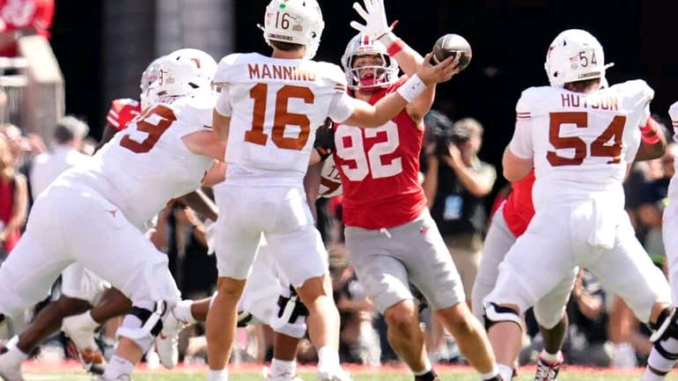
For college football fans, there was a time when the biggest arguments of the week were settled on Saturdays.
Who deserved to be ranked higher? Which quarterback was ready to become a star? Could a struggling program pull off an upset? Would a highly rated recruit stay committed? Which coach was under the most pressure?
Those questions still matter. In fact, they are what make college football special.
But increasingly, conversations about the sport seem to begin somewhere other than the football field. They begin in Washington.
Congress has become increasingly interested in the future of college athletics, particularly as the sport deals with name, image and likeness compensation, athlete employment questions, conference realignment, transfer rules and the growing financial divide between programs. Lawmakers have discussed legislation intended to create more consistency in an increasingly complicated system.
Those discussions are important. College football has changed dramatically, and the rules surrounding the sport need attention.
But there is a point where fans have to step back and ask a simple question: How much of their attention should be given to Washington?
For many college football fans, the answer should be less than they are giving it now.
The sport is too big, too competitive and too deeply connected to its communities to be defined entirely by congressional hearings, political statements and debates happening hundreds or thousands of miles away from the stadiums where college football actually lives.
Washington can influence the sport.
It should not become the center of it.
College Football Is Bigger Than Politics
The greatest strength of college football has never been its relationship with politicians.
It is the connection between schools and communities.
On fall Saturdays, college towns come alive. Students fill stadiums, alumni return to campus, families gather around televisions and fans travel across the country to watch their teams play.
The sport creates traditions that have survived generations.
Rivalries matter because they are personal. A game between two schools can mean something to people who have never attended either university. A particular stadium, fight song or marching band can carry memories from childhood into adulthood.
That emotional connection cannot be created through legislation.
No congressional bill can manufacture the atmosphere of a rivalry game. No committee hearing can recreate the feeling of a packed stadium during a fourth-quarter comeback. No political debate can replace the excitement of watching a young player make the biggest play of his career.
That is why fans should be careful about allowing political discussions to consume their relationship with the sport.
There are legitimate issues that deserve attention. But college football should ultimately be judged by what happens between the lines.
The Sport Is Already Going Through Enough Change
College football has experienced enormous change in recent years.
The transfer portal has altered roster construction. NIL opportunities have changed recruiting. Conference realignment has transformed traditional rivalries and created new national matchups. The College Football Playoff has expanded, giving more teams a realistic path toward a championship.
At the same time, programs are spending enormous amounts of money trying to compete at the highest level.
Coaches are dealing with new challenges. Athletic departments are trying to balance budgets. Players are navigating a system that offers more opportunities but also introduces uncertainty.
It is understandable that lawmakers want to find a way to bring order to the situation.
The problem is that Washington does not have an easy solution.
College football is not a simple business with identical rules for every participant. It includes public universities, private universities, conferences, athletic departments, coaches, players, boosters, television networks, sponsors and millions of fans.
Every decision creates winners and losers.
A rule designed to help one group may create unintended consequences for another.
That reality should encourage caution.
Fans Should Focus on What They Can Actually Control
One reason sports are so powerful is that fans can participate emotionally without controlling the outcome.
You cannot decide who wins the championship.
You cannot call the plays.
You cannot determine which recruit signs with your school.
But you can choose how much attention you give the sport.
That is why fans should consider stepping away from the daily political arguments surrounding college football and putting more energy into the things that make the sport enjoyable.
Follow your team.
Watch the games.
Learn about the players.
Enjoy the rivalries.
Support your school.
Argue about rankings.
Debate which quarterback deserves the Heisman Trophy.
Talk about recruiting.
Celebrate the victories and complain about the losses.
Those conversations may seem less important than congressional debates, but they are actually closer to the heart of college football.
Politics will always be there.
The season will not.
Washington Cannot Create Competitive Balance by Itself
One of the biggest challenges facing college football is competitive balance.
The richest programs have access to resources that smaller programs cannot always match. Television revenue varies dramatically. Recruiting resources differ. Facilities, fan bases and donor support are not evenly distributed.
These are real problems.
But solving them will require more than simply passing a federal law.
College football’s leaders must also take responsibility.
Universities must determine what kind of programs they want to build. Conferences must consider how revenue is distributed. Athletic directors must make difficult financial decisions. Coaches must develop players instead of simply chasing stars. Fans must decide what they are willing to support financially.
The sport itself has to participate in its own reform.
Washington can establish rules, but it cannot create a healthy college football culture.
That responsibility belongs largely to the people who run and participate in the sport.
Fans Should Not Become Exhausted by the Politics
There is another reason to look beyond Washington: fatigue.
Sports fans already consume an enormous amount of information.
There are recruiting reports, injury updates, transfer news, depth charts, coaching rumors, rankings, predictions, interviews and game analysis.
Adding another endless stream of political arguments can make the sport feel like a debate over policy rather than an entertainment experience.
That does not mean fans should ignore important issues.
It means they should put those issues into perspective.
If every conversation about college football becomes a discussion about Congress, lawsuits, legislation and political disagreements, something important gets lost.
The game itself gets pushed into the background.
That would be a mistake.
The Players Still Deserve to Be at the Center
At the heart of every discussion about college football are the players.
They are the ones practicing in the heat, lifting weights before sunrise, studying film, traveling across the country and taking the physical risks associated with the game.
The modern college football system needs to give players meaningful opportunities and fair treatment.
But players are also more than legal or political subjects.
They are students, competitors and young people pursuing an opportunity.
Fans should remember their stories.
A freshman fighting for playing time.
A senior trying to finish his career with a championship.
A walk-on earning a scholarship.
A quarterback trying to prove himself.
A defensive player returning from an injury.
A recruit choosing between competing schools.
Those stories are why people fall in love with college football.
They deserve more attention than the latest argument coming out of Washington.
Rivalries Still Matter
One of the clearest ways to remember what college football is about is to look at its rivalries.
There are games that have mattered for generations.
The hatred, pride, tradition and history surrounding those matchups cannot be reduced to business negotiations or political debates.
When two rivals meet, fans are not thinking about congressional committees.
They are thinking about bragging rights.
They are thinking about family members who attended the opposing school.
They are thinking about old games and legendary players.
They are thinking about what the result means for their community.
That emotional connection is the foundation of the sport.
College football should modernize without losing that identity.
The Future Will Be Complicated Regardless
Looking beyond Washington does not mean pretending that college football’s problems will disappear.
They will not.
The sport is likely to continue evolving.
There will be more discussions about athlete compensation. Recruiting will remain competitive. Conference structures may continue to change. Television money will remain influential. Universities will continue looking for ways to increase revenue and compete for championships.
Some changes will be welcomed.
Others will frustrate fans.
That is normal.
Sports have always changed.
What matters is whether those changes preserve the reasons people care in the first place.
The best version of college football should still give fans something to believe in.
It should give students a reason to fill the stands.
It should give alumni a reason to return home.
It should give players an opportunity to develop.
And it should give communities something to rally around.
Fans Have More Power Than They Think
Ultimately, fans are not powerless.
Their attention is valuable.
Television ratings matter. Ticket sales matter. Merchandise sales matter. Donations matter. Social media engagement matters. Attendance matters.
Universities and conferences pay attention to what fans support.
That means fans can influence the direction of college football without spending every day arguing about politics.
If supporters want meaningful rivalries, they can demand that schools preserve them.
If they want better treatment of players, they can support programs that prioritize player development and welfare.
If they want competitive football, they can reward programs that build responsibly.
If they dislike certain changes, they can make their opinions known through the channels that actually influence athletic departments.
That is more constructive than simply waiting for Washington to fix everything.
Let the Game Breathe
College football does not need to be insulated from politics.
That would be unrealistic.
The sport involves billions of dollars, major public institutions and issues that inevitably attract government attention.
But there should still be boundaries.
Fans should be able to enjoy a Saturday without feeling as though every game is another chapter in a political argument.
They should be able to celebrate their teams.
They should be able to debate coaches.
They should be able to argue about playoff selections.
They should be able to watch a rivalry game without turning every conversation into a discussion about federal policy.
There is nothing wrong with caring about the future of college football.
In fact, fans should care deeply.
But caring about the sport does not require allowing Washington to dominate the conversation.
The Field Still Matters Most
When the season begins, the noise will eventually fade.
The speeches will come and go.
Political debates will change.
Proposals will be introduced, modified and sometimes abandoned.
But the players will still take the field.
The stadium lights will still come on.
The bands will still play.
The student sections will still be loud.
Coaches will still make decisions that determine games.
And fans will still experience the joy, frustration and uncertainty that make college football unlike anything else in American sports.
That is where the attention should return.
College football has serious challenges, and responsible leadership is necessary to address them. But the sport does not belong exclusively to politicians, administrators or lawyers.
It belongs to the players who play it, the coaches who teach it, the universities that build it and, perhaps most importantly, the fans who have supported it for generations.
Washington can debate the future of college athletics.
Fans should be free to focus on the reason they became fans in the first place.
The game.
It is time to look beyond Washington—not because the issues there do not matter, but because college football is too important to be reduced to them.
The future of the sport will not be decided in a single hearing or by one piece of legislation.
It will be shaped by thousands of decisions made across campuses, locker rooms, athletic departments, conference offices and stadiums.
And when the ball is finally kicked off, that is where the real story begins.
Leave a Reply