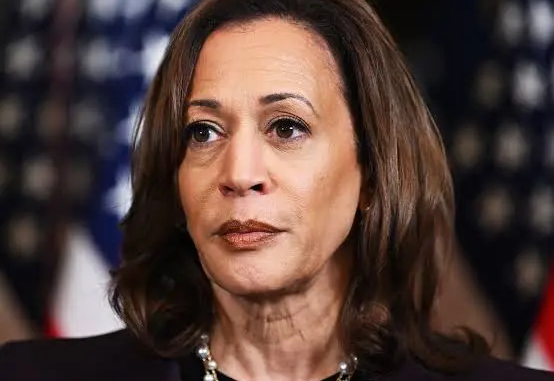
Democratic congressional candidate Chris Jones has received a significant boost to his 2026 campaign after former Vice President Kamala Harris endorsed his bid for Arkansas’ 2nd Congressional District.
Harris’ endorsement gives Jones one of the most recognizable names in the Democratic Party behind his campaign as he prepares for a November contest against Republican incumbent French Hill. The race has attracted increased attention after recent polling suggested that what was once viewed as a difficult Democratic contest could become considerably more competitive.
For Jones, the endorsement comes at a critical stage of the campaign. It provides national recognition while reinforcing the message he has been trying to build around the economic concerns facing Arkansas families.
Harris pointed specifically to the cost of living when explaining her decision to support Jones. She argued that families are feeling pressure from rising housing costs, groceries, gasoline, health care and child care, and portrayed Jones as a candidate prepared to make those issues central to his work in Congress.
The endorsement places Jones in a stronger national spotlight, but it also raises expectations for his campaign.
Harris’ decision to endorse Jones was not framed primarily around Washington politics or partisan competition. Instead, her message focused heavily on household finances.
In announcing her support, Harris said Jones had demonstrated that he would work to lower costs and described him as someone willing to fight for Arkansas families.
That message fits closely with the broader economic argument Jones has been making on the campaign trail.
For voters, issues such as housing, food prices, gasoline, medical expenses and child care can be more immediate than the larger political debates taking place in Washington. Candidates frequently talk about economic growth and government spending, but voters ultimately judge those issues through their own household budgets.
Jones is attempting to capitalize on that reality.
His campaign can now point to Harris’ endorsement as evidence that national Democrats are paying attention to the race and believe his economic message can resonate beyond the traditional Democratic base.
At the same time, the endorsement gives Republicans an opportunity to portray Jones as closely aligned with national Democratic leadership. That could become an important part of the Republican strategy as the campaign moves toward November.
Arkansas’ 2nd Congressional District has traditionally been a difficult environment for Democrats.
Hill, the Republican incumbent, has built a strong political position in the district and has won previous elections. Yet the 2026 contest is attracting more attention because recent polling has shown Jones performing competitively.
A recent independent poll cited by Arkansas news outlets put Jones ahead of Hill, 48% to 44%. The poll does not guarantee a Democratic victory, but it has changed the conversation surrounding the race.
The Democratic Congressional Campaign Committee has also identified Arkansas’ 2nd District as a district that could be in play.
That combination of polling and national attention means Jones is no longer simply campaigning as an underdog hoping to surprise Republicans. His campaign is now being evaluated as part of a broader Democratic effort to compete in districts that have historically leaned Republican.
Still, polls can change quickly, particularly in congressional races.
There are months of campaigning remaining, and voters will be exposed to competing advertisements, debates, campaign events and attacks before Election Day. The eventual outcome will depend on turnout, voter preferences, the national political climate and how effectively both campaigns define one another.
Jones is not a newcomer to Arkansas politics.
He previously ran for governor of Arkansas in 2022, when he became the Democratic nominee. Although he ultimately lost that race, the campaign helped establish him as one of the more recognizable Democratic political figures in the state.
His educational background has also helped distinguish him from many candidates.
Jones attended Morehouse College before pursuing graduate studies at the Massachusetts Institute of Technology. His academic background includes mathematics, physics, nuclear engineering and urban planning.
That combination of technical education and political experience has become an important part of his public identity.
Rather than presenting himself solely as a conventional politician, Jones has often emphasized his background as a scientist and his interest in practical solutions to complicated problems.
His congressional campaign gives him another opportunity to make that case.
This time, however, the challenge is different.
A congressional race requires Jones to build support within a single district while persuading voters who may have very different political priorities. Winning a Democratic nomination is one challenge. Winning a general election against an established Republican incumbent is another.
High-profile endorsements can provide campaigns with several advantages.
They can generate media coverage, energize supporters, help with fundraising and provide candidates with additional credibility among voters who recognize the endorser.
For Jones, Harris’ endorsement accomplishes all of those things to some degree.
It immediately brought additional national attention to his campaign. It also gives Democratic activists and donors another reason to look closely at the race.
But endorsements are not substitutes for organization.
Jones will still need to build a strong campaign operation, communicate effectively with voters and convince people who may not normally support Democratic candidates.
Arkansas remains a challenging state for Democrats, particularly in federal elections.
That means Jones cannot depend exclusively on Democratic voters. If the race is genuinely competitive, he will likely need to appeal to independents and some voters who have previously supported Republicans.
That makes the campaign’s messaging especially important.
Harris’ involvement could also change the Republican approach to the race.
Republican campaigns frequently attempt to nationalize congressional contests when Democratic candidates receive endorsements from prominent national figures. Jones can expect Republicans to emphasize his connection to Harris and the national Democratic Party.
The Republican argument will likely focus on whether voters in Arkansas want a representative who is closely associated with national Democratic leadership.
Jones, meanwhile, has an incentive to keep the conversation focused on local and economic concerns.
That creates a central strategic question for the campaign: Can Jones make the election about Arkansas families rather than about national partisan politics?
If he can, Harris’ endorsement could help him without becoming the defining feature of his candidacy.
If the election becomes primarily a referendum on national Democratic leadership, Republicans may see an opportunity to reinforce their traditional advantage in the district.
For Hill, the emergence of a competitive Democratic campaign means the race may require more attention and resources than expected.
Incumbents generally benefit from name recognition, established fundraising networks and a record that can be presented to voters.
But incumbency also comes with vulnerabilities.
Every vote and policy position can become part of a campaign debate. If Jones succeeds in making the election primarily about the cost of living, Hill will have to explain how his record addresses the financial pressures facing voters.
That could make economic issues one of the central battlegrounds of the campaign.
Jones is likely to argue that Arkansas families need relief from high costs and that Washington has not done enough to address everyday financial pressures.
Hill and his Republican allies will have the opportunity to offer a different interpretation of the economy and highlight the policies they believe have benefited the district.
The resulting debate could determine whether the race remains competitive through Election Day.
Jones’ campaign also reflects a larger question facing Democrats heading into the 2026 midterms.
Rather than concentrating exclusively on traditionally Democratic districts, the party has been looking for opportunities in places where changing political conditions could create openings.
Arkansas is not an obvious Democratic target.
That is precisely why a competitive race there would attract attention.
If Jones can remain competitive, Democrats could argue that the political map is broader than many Republicans expect. Even if he does not ultimately win, a strong performance could demonstrate that Democrats can compete in parts of the country where they have struggled in recent federal elections.
For Harris, meanwhile, endorsements such as this one provide a way to remain politically engaged and influential after leaving national office.
Her support for Jones is part of a broader pattern of involvement in Democratic politics, particularly in the South. National political observers are watching how she uses her influence during the 2026 election cycle.
The significance of Harris’ endorsement ultimately depends on what the Jones campaign does with it.
A high-profile endorsement can create attention, but attention only becomes politically valuable when a campaign converts it into organization, fundraising and votes.
Jones now has an opportunity to present himself to a much wider audience.
His campaign can use Harris’ support to reinforce its argument that Arkansas deserves a representative focused on everyday economic challenges. It can also use the endorsement to attract volunteers and donors who may not have previously considered the race competitive.
But the campaign must be careful not to allow the endorsement to overshadow Jones himself.
Voters in Arkansas’ 2nd District will ultimately be choosing between candidates, not endorsements.
Jones will have to explain what he would do in Congress, how his policies would affect Arkansas and why voters should replace an incumbent who already has experience in Washington.
The 2026 contest between Jones and Hill is becoming one of the more closely watched House races in Arkansas.
Jones has already secured the Democratic nomination, while Hill has secured the Republican nomination for the general election. The two are scheduled to face each other on November 3, 2026.
Harris’ endorsement adds another layer to an increasingly competitive contest.
It gives Jones a major national ally at a moment when his campaign is attempting to convince voters that the district is ready for a change.
For Democrats, the endorsement represents an opportunity to demonstrate that their candidates can compete in traditionally difficult territory.
For Republicans, it serves as another reminder that national Democratic figures are taking the race seriously.
And for voters, the endorsement is likely to intensify the debate over what kind of representation Arkansas’ 2nd District wants in Congress.
The months ahead will determine whether Harris’ endorsement becomes a turning point or simply another headline in a long campaign.
Jones now has the attention.
His next challenge is turning that attention into momentum—and ultimately into votes.
Leave a Reply