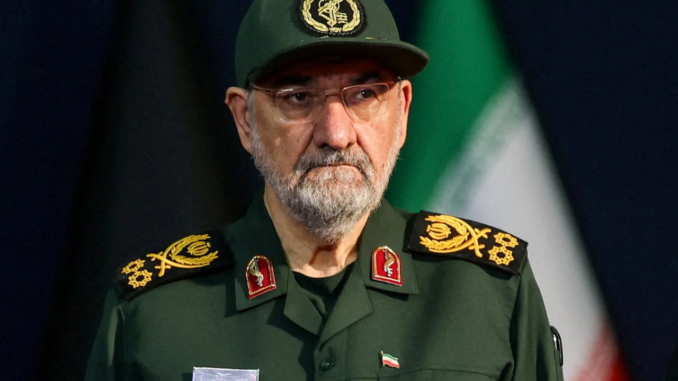
Iran has issued a fresh warning to neighboring countries, raising concerns over the future of oil shipments through the Persian Gulf as tensions with the United States continue to intensify. The warning, attributed to Iranian security chief Mohsen Rezaei, signals that Tehran could take a tougher approach toward regional states that cooperate with Washington’s economic pressure campaign.
The remarks have added another layer of uncertainty to an already tense regional environment. The Persian Gulf remains one of the world’s most important energy corridors, and any serious disruption to shipping could have consequences far beyond the Middle East. Oil prices, global markets, shipping costs and the economies of major energy-consuming countries could all be affected if the situation deteriorates.
Rezaei’s warning was directed not only at the United States but also at countries in Iran’s immediate neighborhood. Tehran has long viewed cooperation between Gulf states and Washington with suspicion, particularly when such cooperation involves sanctions, restrictions on Iranian trade or efforts to reduce Iran’s ability to sell oil.
The latest message therefore carries a broader political meaning. Iran appears to be warning neighboring governments that joining the American economic campaign could expose them to retaliation.
Iran’s warning to neighboring countries
For years, Iran has relied on a combination of political pressure, military deterrence and regional alliances to respond to foreign sanctions. The country’s leadership has repeatedly argued that economic pressure is another form of warfare and that Tehran has the right to respond when its economy is deliberately targeted.
Rezaei’s latest comments fit into that broader strategy.
The warning suggests that Iran does not intend to view economic pressure as a purely financial issue. Instead, Tehran could treat efforts to isolate its economy as a strategic threat and respond by increasing pressure on countries that assist the campaign.
That creates a difficult situation for Gulf nations. Many of them maintain strong economic relationships with the United States while also having important geographical, commercial and security relationships with Iran.
Countries around the Gulf have an interest in maintaining stable oil markets and uninterrupted shipping. At the same time, they must carefully manage their relationships with Washington and Tehran.
Any escalation could therefore force regional governments to make difficult choices.
Iran’s message is essentially that those choices could have consequences.
Why the Strait of Hormuz matters
At the center of the latest concerns is the Strait of Hormuz, the narrow waterway connecting the Persian Gulf with the Gulf of Oman and the wider Arabian Sea.
The strait is strategically important because enormous volumes of crude oil and other energy products pass through it. For decades, the waterway has been regarded as one of the world’s most critical energy chokepoints.
Iran’s geographic position gives it considerable influence over the area. The country controls territory along the northern side of the strait, while several Gulf states are located on the southern side.
That geography has made Hormuz a recurring source of international concern whenever tensions between Iran and Western powers rise.
A serious disruption would not necessarily require a complete closure of the waterway. Even threats, attacks on shipping or heightened insurance costs could make transportation more expensive and create uncertainty in energy markets.
That is why comments from Iranian officials regarding the movement of oil through the Gulf are closely watched by governments, investors and energy companies.
The economic pressure campaign
The confrontation between Iran and the United States has a long history, with sanctions playing a central role in Washington’s strategy toward Tehran.
American sanctions have targeted various parts of Iran’s economy, including its energy sector. Because oil exports are a major source of revenue for Iran, restrictions on the country’s ability to sell crude can place significant pressure on government finances.
From Tehran’s perspective, however, the sanctions are not simply economic measures. Iranian officials have repeatedly described them as an attempt to weaken the country and force its leadership to change its policies.
That explains why Iranian officials sometimes use the language of an “economic war.”
Rezaei’s warning suggests that Tehran could attempt to make the economic consequences of the confrontation more regional. Instead of allowing sanctions to affect Iran alone, the threat is that Iran could retaliate in ways that also affect countries participating in or benefiting from the pressure campaign.
Such a strategy would represent a significant escalation because it could widen the economic consequences of the U.S.-Iran confrontation.
Gulf states face a delicate balancing act
The warning places Gulf countries in an uncomfortable position.
Many regional governments have strengthened their economic, military and diplomatic relationships with Washington over the years. The United States remains an important security partner for several countries in the region.
At the same time, Gulf states have increasingly sought to improve their relations with Iran.
This balancing act has become particularly important as countries in the region pursue economic diversification. Governments are investing heavily in tourism, infrastructure, technology, logistics and international trade.
Regional stability is essential to those plans.
A major conflict involving Iran could threaten investment, disrupt shipping and increase the cost of doing business across the region.
For that reason, Gulf governments generally have strong incentives to prevent tensions from reaching the point of direct confrontation.
Iran’s latest warning could therefore be interpreted as an attempt to discourage neighboring countries from becoming directly involved in Washington’s economic campaign.
Oil markets could feel the impact
The greatest international concern is likely to involve energy markets.
The Persian Gulf is central to the global oil trade. Major oil-producing countries depend on the region’s shipping routes to transport crude to customers around the world.
If those routes were seriously disrupted, the consequences could spread quickly.
Oil traders could react to the possibility of supply shortages even before an actual disruption occurred. Prices could rise because markets often respond to anticipated risks rather than confirmed shortages.
Higher oil prices could then affect transportation, manufacturing and household energy costs.
Countries that rely heavily on imported energy would face additional pressure. Airlines, shipping companies and manufacturers could also see their operating costs increase.
The effects would not necessarily remain limited to countries near the Gulf. Global energy markets are interconnected, meaning that a regional security crisis can quickly become an international economic issue.
This is one reason why threats involving Hormuz receive so much attention.
A dangerous cycle of escalation
One of the biggest risks is that threats and counter-threats could create a cycle that becomes increasingly difficult to control.
Iran could view additional sanctions as an act of economic aggression. Washington could respond to Iranian retaliation with more sanctions or military pressure. Regional governments could then be forced to strengthen security cooperation with the United States.
Tehran could interpret those moves as further evidence that neighboring countries are participating in an effort to isolate Iran.
The result could be a cycle of escalation.
History has shown that tensions in the Gulf can rise rapidly. A relatively limited incident involving a commercial vessel, military patrol or sanctions enforcement operation can sometimes become part of a much larger confrontation.
That is why diplomatic efforts remain important.
Even when governments disagree sharply, communication channels can help prevent misunderstandings from turning into military crises.
The broader message from Tehran
Beyond the immediate threat involving oil shipments, Rezaei’s remarks send a political message to both Washington and the wider region.
Iran wants its opponents to understand that economic pressure carries risks. Tehran appears determined to demonstrate that attempts to weaken its economy will not necessarily produce a one-sided result.
The warning also reinforces Iran’s longstanding argument that the country possesses strategic options because of its geographic position and regional influence.
For Tehran, the ability to threaten important energy routes represents a form of deterrence.
For the United States and its allies, however, such threats are likely to be viewed as evidence that pressure on Iran could produce dangerous unintended consequences.
That difference in perspective makes diplomacy even more complicated.
What happens next?
The immediate question is whether Iran’s warning remains a political threat or develops into concrete action.
Governments in the region will be watching closely. Any move affecting commercial shipping could have major consequences, particularly if international shipping companies begin to view the Gulf as increasingly dangerous.
The United States is also likely to monitor developments carefully.
Washington has a long-standing interest in keeping major international waterways open and protecting the movement of energy supplies. Any credible threat to shipping would therefore attract significant attention from American officials and military planners.
For Gulf countries, the priority will likely remain avoiding direct involvement in a confrontation between Iran and the United States.
Diplomatic engagement could become increasingly important as regional governments attempt to prevent economic disputes from becoming security crises.
A warning with global implications
Iran’s latest warning demonstrates how closely economics and security remain connected in the Persian Gulf.
What begins as a dispute over sanctions and oil revenue can quickly become a question of maritime security, regional alliances and global energy stability.
The possibility of disruption to Gulf oil shipments is particularly significant because the region plays such an important role in supplying the international market.
For Iran, threatening those routes may be intended to demonstrate that the country cannot be isolated without consequences. For neighboring countries, however, the warning creates another challenge as they attempt to maintain relationships with both Tehran and Washington.
The situation also highlights the risks associated with economic pressure campaigns in strategically sensitive regions. Sanctions can impose serious costs, but governments facing those sanctions may search for ways to retaliate.
Whether Iran ultimately takes steps to disrupt oil shipments remains a critical question. For now, the warning alone is enough to increase uncertainty.
The Persian Gulf has experienced many periods of tension, but its importance to the global economy means that every new escalation carries consequences well beyond the countries directly involved.
As the confrontation between Tehran and Washington continues, neighboring governments will be under pressure to choose their positions carefully. The United States will have to consider how far it can push its economic campaign without triggering a wider regional crisis, while Iran will face the challenge of demonstrating strength without provoking a confrontation that could damage its own interests.
For the global economy, the hope will be that the latest threats remain warnings rather than becoming actions.
With so much of the world’s energy trade passing through the Gulf, even a limited disruption could send shockwaves through international markets. That makes Iran’s message not simply a regional political statement, but a development with the potential to affect economies and consumers far beyond the Middle East.
Leave a Reply