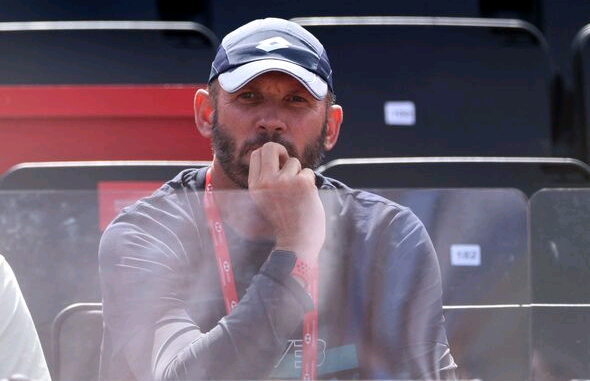
As the tennis world turns its attention toward Wimbledon, one of the sport’s most recognizable names finds herself at the center of an increasingly intense debate. British star Emma Raducanu is preparing for another appearance at the prestigious Grand Slam, but discussions surrounding her chances have been overshadowed by growing questions about the decisions being made within her camp.
Raducanu’s journey since her stunning triumph at the 2021 US Open has been anything but straightforward. The young Brit captured global attention when she became the first qualifier in tennis history to win a Grand Slam singles title, achieving the feat without dropping a set. The victory instantly transformed her into one of the sport’s biggest stars and raised expectations that she would become a long-term fixture among the game’s elite.
However, the years that followed have brought challenges that few could have predicted. Injuries, coaching changes, fluctuating form, and the immense pressure that comes with global fame have all played a role in shaping Raducanu’s career since that remarkable breakthrough. Now, with Wimbledon approaching, another chapter has emerged as critics question whether her current preparation strategy is the right one.
The concerns stem from decisions regarding her tournament schedule and overall grass-court preparation. While many players use the short grass season to accumulate as many competitive matches as possible before Wimbledon, Raducanu’s team has opted for an approach that some analysts believe carries significant risks.
Former players and commentators have openly questioned whether the strategy provides enough competitive exposure before the year’s most important grass-court tournament. For many observers, match sharpness is especially critical on grass, a surface that requires precise timing, quick reactions, and confidence built through repeated competition.
The criticism has been particularly vocal because Wimbledon presents a unique opportunity for Raducanu. As one of Britain’s most recognizable sporting figures, she enters the tournament with enormous public support. The atmosphere created by home fans has the potential to elevate a player’s performance, and many believe Raducanu possesses the game to thrive on grass courts.
Her aggressive baseline style, ability to take the ball early, and willingness to attack opponents make her naturally suited to the faster surface. At her best, she has demonstrated the ability to challenge elite players and produce tennis of the highest quality.
Yet critics argue that talent alone may not be enough.
Several former professionals have suggested that players benefit most from entering Wimbledon after gaining momentum through strong performances at lead-up events. The grass-court season is notoriously short, meaning there are limited opportunities to adapt from clay or hard courts. Every match becomes valuable, and many top players carefully structure their schedules to maximize competitive preparation.
This is where the debate surrounding Raducanu’s camp has intensified. Detractors believe the team’s approach may leave her lacking the rhythm necessary to compete deep into the tournament. Some have gone so far as to describe the strategy as puzzling, particularly given her history of struggling to maintain consistency after long periods away from competition.
Supporters of the coaching team, however, offer a different perspective.
They point out that Raducanu’s injury history cannot be ignored. Since her US Open victory, physical setbacks have repeatedly interrupted her progress. She has dealt with various injuries that have forced withdrawals, shortened seasons, and disrupted her development.
In that context, managing workload becomes a crucial consideration.
A schedule that appears conservative from the outside may actually be designed to ensure she arrives at Wimbledon healthy and physically capable of competing at her highest level. Modern sports science places increasing emphasis on recovery, injury prevention, and long-term planning. Coaches today often rely on data, fitness monitoring, and individualized training programs rather than simply maximizing tournament appearances.
Those defending Raducanu’s team argue that outside observers do not have access to the complete picture. Decisions made behind closed doors are often influenced by factors that remain private, including medical advice, training results, and physical assessments.
Nevertheless, the public nature of professional tennis means scrutiny is unavoidable.
Raducanu’s career has consistently generated headlines beyond her on-court performances. Since becoming a global star at such a young age, virtually every decision involving her development has attracted attention. Coaching appointments have been analyzed extensively, while changes in management and scheduling have often become topics of discussion throughout the tennis world.
The latest controversy reflects the extraordinary expectations that continue to surround her.
Many young players would consider reaching the later rounds of major tournaments a significant achievement. For Raducanu, however, comparisons are frequently made to her US Open triumph, creating a standard that is exceptionally difficult to maintain.
This pressure is particularly evident during Wimbledon season.
The tournament occupies a special place in British sport, and local players often face an intense spotlight. Every practice session, every interview, and every strategic decision can become a headline. The public’s desire to see a homegrown champion frequently amplifies both praise and criticism.
For Raducanu, handling that environment will be just as important as any technical or tactical preparation.
One of the most impressive aspects of her US Open run was her composure. Despite her age and relative inexperience, she displayed remarkable calmness throughout the tournament. She embraced pressure situations, trusted her game, and consistently executed under the brightest lights.
Recreating that mentality could prove vital in the coming weeks.
There are also encouraging signs regarding her overall development. When healthy, Raducanu has shown flashes of the level that once stunned the tennis world. Her shot-making remains among the best in the women’s game, and her movement has continued to improve following her return from injury setbacks.
Many analysts believe that if she can stay physically fit, her ranking will eventually rise to reflect her true ability.
The challenge lies in finding the right balance between development and immediate results.
Young players often face difficult decisions regarding coaching philosophies, tournament schedules, and training methods. What works for one athlete may not work for another. The most successful teams are often those willing to make unconventional choices when they believe those choices serve the player’s long-term interests.
That reality makes it difficult to judge Raducanu’s camp solely based on public perception.
If she arrives at Wimbledon healthy, confident, and ready to compete, the strategy may ultimately be vindicated. Strong performances have a way of silencing criticism and transforming controversial decisions into examples of smart planning.
Conversely, an early exit would likely intensify questions surrounding the preparation process and fuel further debate about whether a different approach should have been adopted.
As Wimbledon draws near, all eyes will be on Raducanu. The discussions surrounding her coaching team and preparation strategy are unlikely to disappear anytime soon. Yet ultimately, the answers will come not from analysts, commentators, or critics, but from the court itself.
For Emma Raducanu, the opportunity remains the same: to demonstrate that she can once again compete at the highest level and remind the tennis world why she became one of its brightest stars in the first place. Whether her camp’s strategy proves inspired or misguided will soon be revealed on the grass courts of Wimbledon, where every decision is tested under the sport’s most unforgiving spotlight.
Leave a Reply