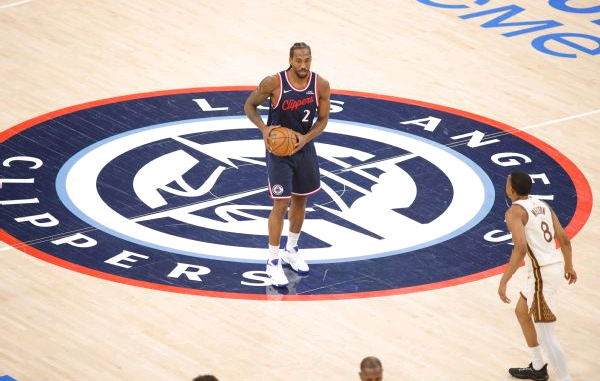
The Los Angeles Clippers have been hit with one of the most significant punishments in recent NBA history after the league concluded its investigation into allegations surrounding Kawhi Leonard and potential salary-cap circumvention.
The NBA announced a sweKawhieping collection of penalties on Wednesday, bringing an end to a nearly yearlong investigation that placed the Clippers, team owner Steve Ballmer, several executives and Leonard under intense scrutiny.
The punishment is substantial. The Clippers will lose five future first-round draft picks, receive a $30 million fine and enter a five-year compliance and monitoring program. Ballmer has also been suspended from all league and team activities for one year, while other members of the organization have received suspensions.
Leonard, meanwhile, has been fined $700,000.
The decision represents a major blow to a franchise that has spent years attempting to establish itself as one of the NBA’s premier organizations. More importantly, it raises questions about how the Clippers built their roster during the Leonard era and how the franchise will recover from the loss of so many valuable draft assets.
The most damaging part of the NBA’s decision for the Clippers may not be the $30 million fine.
It is the loss of five first-round draft picks.
The league ordered the Clippers to forfeit their first-round selections in the 2029, 2030, 2031, 2032 and 2033 NBA drafts. That means the consequences of the investigation will remain attached to the franchise for years.
Draft picks are among the most valuable assets in professional basketball. They give teams opportunities to select young talent, make trades and rebuild when an aging roster reaches the end of its competitive window.
Losing five consecutive first-round selections severely limits those options.
For a team such as the Clippers, that could become particularly important as the organization looks toward the future. The franchise has invested heavily in established stars, but eventually every veteran-heavy roster faces the challenge of replacing aging players and maintaining competitiveness.
The five forfeited selections could make that process considerably more difficult.
The NBA’s decision therefore goes beyond punishing the Clippers for past behavior. It changes the organization’s ability to construct its roster well into the next decade.
The investigation began after questions were raised about an endorsement agreement involving Leonard and Aspiration, an environmental financial company that later went bankrupt.
The initial focus was a reported $28 million endorsement deal involving Leonard. The NBA eventually expanded its investigation beyond that agreement, examining relationships between Leonard and several companies connected to the Clippers.
According to the league’s findings, the investigation uncovered what it described as a pattern of misconduct and multiple significant violations of NBA rules.
The league concluded that Clippers personnel helped facilitate off-court income opportunities for Leonard involving companies that did business with the organization. The investigation also examined payments and other arrangements involving Leonard and people within his circle.
The NBA’s findings went beyond the question of whether Leonard had signed an unusual endorsement agreement. Investigators examined whether the Clippers had effectively helped create opportunities that could provide Leonard with compensation outside the salary-cap system.
That distinction was central to the case.
The NBA’s collective bargaining agreement establishes strict rules governing how teams compensate players. Those rules are designed to prevent wealthy or well-connected organizations from finding alternative ways to provide players with compensation that effectively operates outside the salary cap.
If teams could freely create side arrangements to supplement player salaries, the salary-cap system would lose much of its effectiveness.
That is why the league treated the case so seriously.
The suspension of Steve Ballmer is another defining part of the NBA’s ruling.
Ballmer, one of the wealthiest owners in professional sports, has been a highly visible figure since purchasing the Clippers. His enthusiasm for the franchise and his willingness to spend aggressively helped change the perception of the organization.
But the NBA’s findings now place his ownership under a different kind of spotlight.
Ballmer has been suspended from all league and team activities for one year. According to the NBA’s findings, he knowingly sought to help Leonard obtain off-court income opportunities.
The suspension means Ballmer will temporarily be separated from the day-to-day operations of the organization he owns.
That is an extraordinary punishment for an NBA owner.
The league’s decision also sends a message to other team owners. Financial resources cannot be used to create arrangements that undermine the league’s compensation rules.
Ballmer and the Clippers have strongly rejected the NBA’s conclusions, however.
The organization said it disagrees with the findings and intends to challenge the penalties. Ballmer’s attorney also criticized the investigation and questioned the league’s process, arguing that the Clippers were punished for conduct the organization does not believe violated an established NBA rule.
That dispute means the story may not end with the NBA’s announcement.
The consequences did not stop with Ballmer.
Clippers president of business operations Gillian Zucker was suspended without pay for one year, while president of basketball operations Lawrence Frank received a six-month suspension.
Those penalties demonstrate that the league’s investigation was not limited to ownership.
The NBA concluded that the problems involved organizational leadership and internal decision-making. Commissioner Adam Silver described the violations as serious and pointed to institutional failures within the franchise.
That criticism may be just as damaging to the Clippers’ reputation as the financial penalties.
Successful sports organizations depend on strong internal controls. Owners, executives, coaches and players must understand where the boundaries of league rules exist.
The NBA’s findings suggest that the Clippers failed in that responsibility.
Leonard’s involvement remains one of the most closely watched aspects of the entire case.
The two-time NBA champion was fined $700,000 by the league.
However, Leonard has maintained that he was unaware of the alleged salary-cap violations. In his response, he expressed regret over mistakes involving members of his inner circle while maintaining that he acted in good faith.
The NBA’s findings nevertheless included conduct involving Leonard’s representatives and business relationships.
That distinction matters.
The league did not suspend Leonard from basketball, and the penalty imposed on him was considerably smaller than those facing the Clippers and Ballmer.
Still, the investigation has permanently attached his name to one of the biggest salary-cap controversies of the decade.
For a player whose career has generally been defined by keeping a low public profile, the controversy represents an unusual level of attention away from the court.
Leonard’s former business manager and uncle, Dennis Robertson, also received a significant punishment.
The NBA banned Robertson from NBA-related activities for five years.
According to the investigation’s findings, Robertson played an important role in seeking off-court income opportunities for Leonard.
The league’s decision shows that the NBA was prepared to punish not only the franchise and its executives but also individuals who played a role in the arrangements under investigation.
It also reinforces the importance of representatives understanding the limits imposed by the league’s collective bargaining agreement.
Agents, managers and business advisers may operate outside the formal basketball structure, but their actions can still create consequences for players and teams.
For Clippers fans, the five lost first-round picks may eventually become the most painful consequence.
A $30 million fine is expensive, but an organization with substantial financial resources can absorb a major financial penalty.
Draft picks are different.
They cannot simply be purchased back.
The Clippers now enter the next several years knowing that their ability to add young talent through the first round has been dramatically reduced.
That could affect trade negotiations as well. Draft selections are often used as currency when teams attempt to acquire star players.
Without those picks, the Clippers have fewer assets available for blockbuster trades.
The timing makes the punishment even more significant.
The NBA has become increasingly dependent on player movement, draft assets and long-term roster planning. Teams must constantly balance present success with future flexibility.
The Clippers have now sacrificed a large portion of that future flexibility.
The Clippers will also be subjected to a five-year compliance and monitoring program.
This means the organization will face additional oversight as it works to ensure that similar problems do not occur again.
The monitoring period could be uncomfortable for a franchise that has spent years trying to operate as one of the NBA’s most aggressive organizations.
The league clearly wants the Clippers to change their internal processes.
The message is straightforward: future business relationships involving players, sponsors and outside companies will need to receive greater scrutiny.
For the Clippers, that means rebuilding trust not only with the NBA but also with other teams, players and fans.
Despite the severity of the ruling, the Clippers are not accepting the NBA’s findings quietly.
The organization has rejected the league’s conclusions and said it plans to challenge the sanctions through available avenues.
That creates another chapter in the controversy.
The Clippers’ argument centers partly on the fairness of the investigation and whether the NBA applied rules appropriately. Ballmer’s legal representatives have also criticized the process, describing the investigation as fundamentally unfair.
The league, meanwhile, believes the evidence justified the punishment.
Until the challenge process is completed, the full impact of the sanctions could remain subject to further legal or arbitration developments.
For now, however, the NBA’s ruling stands as the league’s official position.
Perhaps the biggest significance of the Clippers case is what it means for every other team.
The NBA has made it clear that salary-cap rules will be aggressively enforced.
Teams have enormous financial incentives to find creative ways to attract and retain elite players. But the collective bargaining agreement exists precisely to prevent organizations from gaining an advantage through compensation arrangements that fall outside the permitted system.
The Clippers punishment sends a powerful warning.
The loss of five first-round picks is not a routine fine. The one-year suspension of an owner is not a symbolic gesture. The combined penalties demonstrate that the NBA considers salary-cap integrity a fundamental part of competitive fairness.
Other teams are likely to pay close attention to the case.
Owners and executives will want to make certain that relationships between players, sponsors and team-affiliated businesses are carefully documented and reviewed.
The Clippers now face a complicated future.
The organization must deal with the immediate financial punishment, the loss of draft assets and the reputational damage caused by the investigation.
At the same time, the franchise has to maintain its focus on basketball.
That will not be easy.
The Clippers have spent years trying to build a championship-caliber team around superstar talent. Their willingness to make major investments helped transform the franchise from one of the NBA’s least successful organizations into a legitimate contender.
Now, the team has to consider what happens after the current competitive window closes.
With five first-round picks gone, rebuilding will require even greater creativity.
The Clippers may have to become more aggressive in developing second-round selections, finding undrafted players and making smart trades. Their scouting department could become more important than ever.
The organization will also have to convince current and future players that the franchise remains a stable destination despite the controversy.
The NBA’s punishment brings a formal conclusion to its investigation, but it does not necessarily bring an end to the controversy.
The Clippers intend to challenge the findings. Leonard has defended his own lack of knowledge regarding the alleged violations. Ballmer’s representatives have questioned the fairness of the process.
At the same time, the NBA has delivered an unmistakably strong verdict.
Five first-round picks.
A $30 million fine.
A one-year suspension for Ballmer.
Suspensions for key executives.
A $700,000 fine for Leonard.
A five-year ban for Robertson.
And five years of league monitoring.
Taken together, those penalties demonstrate just how seriously the NBA views salary-cap violations.
For the Clippers, the consequences will stretch far beyond the headlines generated by the announcement. The organization now has to deal with the practical challenge of building a competitive roster while operating under greater scrutiny and with fewer draft assets.
The franchise’s response will determine what this episode ultimately means for its future.
The Clippers can challenge the punishment, defend their reputation and attempt to move forward. But regardless of what happens next, the Kawhi Leonard investigation has already become one of the most consequential episodes in the modern history of the franchise.
The NBA has drawn its line.
Now the Clippers must decide how to move forward from it.
Leave a Reply