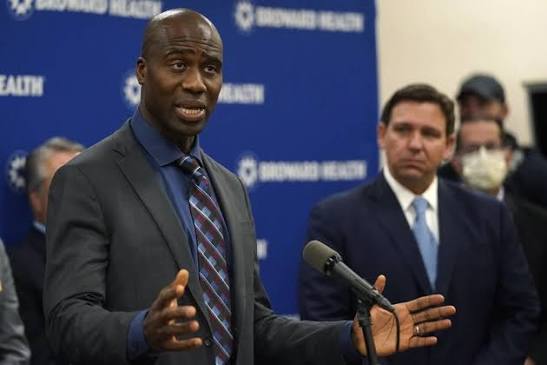
Florida’s Surgeon General Didn’t Calculate the Costs of Ending Vaccine Mandates — But Scientists Have..

Florida’s Surgeon General Didn’t Calculate the Costs of Ending Vaccine Mandates — But Scientists Have

When Florida’s Surgeon General, Dr. Joseph Ladapo, announced that the state was moving to end all vaccine mandates — including those affecting schools and certain workplaces — it sparked a wave of political applause from some quarters and deep concern from public health experts. What has drawn even more attention, however, is Dr. Ladapo’s admission that he did not calculate the potential costs of such a decision in terms of infections, hospitalizations, or deaths.While the state’s top health official may not have run the numbers, scientists and epidemiologists across the country have. Their findings paint a sobering picture of what could happen when vaccine requirements are lifted without alternative safeguards in place.Dr. Ladapo has long been a vocal critic of vaccine mandates, framing them as an infringement on personal freedom and bodily autonomy. His stance aligns with Florida’s broader political climate, where leaders have emphasized individual choice over government-imposed health measures.In announcing the move, Ladapo argued that mandates create unnecessary division and distrust, suggesting that people should be free to make their own health decisions without coercion. However, when pressed on whether his office had assessed the public health impact of ending these mandates, he acknowledged that no such cost-benefit analysis had been conducted.Public health researchers have been studying the effects of vaccine mandates for decades, and the consensus is clear: mandates work. They increase vaccination rates, reduce disease transmission, and protect vulnerable populations who cannot be vaccinated for medical reasons.A recent modeling study by epidemiologists at several U.S. universities estimated that removing school vaccine requirements for diseases like measles, mumps, and rubella could lead to outbreaks affecting thousands of children within just a few years. For COVID-19, the projections are equally concerning. Without mandates, vaccination rates tend to plateau or decline, leaving more people susceptible to infection — especially in communities where misinformation about vaccines is prevalent.The scientists’ models suggest that in a state the size of Florida, ending COVID-19 vaccine mandates could result in tens of thousands of additional infections annually, hundreds of preventable hospitalizations, and dozens of avoidable deaths. These figures do not account for the long-term burden of “long COVID” or the economic costs of increased absenteeism and healthcare spending.While the debate often focuses on personal freedom versus public health, the economic implications are significant. Hospitalizations for preventable diseases are expensive, often costing tens of thousands of dollars per patient. Outbreaks can disrupt schools, workplaces, and tourism — a major driver of Florida’s economy.Scientists point out that the indirect costs, such as lost productivity and the strain on healthcare systems, can far exceed the immediate medical expenses. In past outbreaks, states without strong vaccination policies have faced millions in unplanned public health spending.Ending vaccine mandates doesn’t just affect those who choose not to get vaccinated. It also endangers people with weakened immune systems, infants too young for certain vaccines, and elderly residents who are more susceptible to severe illness.Florida has one of the largest elderly populations in the United States, making it particularly vulnerable to the consequences of reduced vaccination coverage. Public health experts warn that without mandates, the state could see a resurgence of diseases that had been largely under control for decades.Critics argue that making such a sweeping public health decision without calculating the potential costs is risky and irresponsible. “Policy should be informed by evidence, not ideology,” one epidemiologist noted. “If you don’t measure the risks, you can’t manage them.”While Dr. Ladapo’s position resonates with those who prioritize personal choice, the absence of a formal risk assessment leaves Florida navigating a major health policy shift without a clear understanding of its consequences.The decision to end vaccine mandates in Florida is more than a political statement — it’s a public health gamble. Scientists have already done the math, and their projections suggest that the costs, both human and economic, could be steep. Whether those warnings will influence policy remains to be seen, but one thing is certain: the consequences of this decision will unfold in real time, and they will be measurable.

Be the first to comment

Leave a Reply

Your email address will not be published.


*