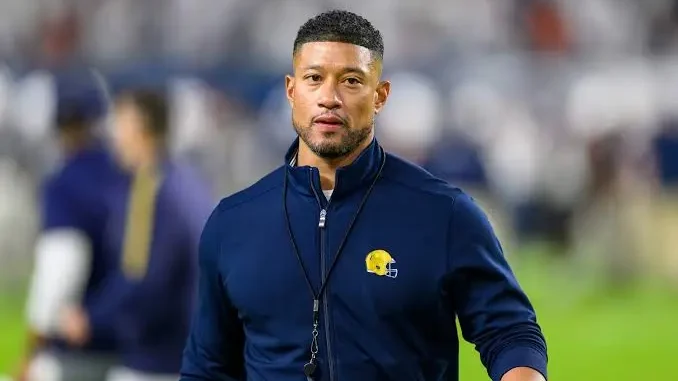
Marcus Freeman has made a strong statement about his future at Notre Dame, offering reassurance to Fighting Irish fans who continue to view him as the face of the program’s next great era.
Since taking over as Notre Dame’s head coach, Freeman has faced the enormous responsibility of leading one of college football’s most historic programs. The job comes with pressure unlike almost any other position in the sport. Notre Dame is expected to compete for national championships, develop NFL talent and maintain a standard established by some of the greatest coaches in college football history.
Freeman understands that responsibility.
Despite the constant speculation surrounding coaching jobs, championship opportunities and the ever-changing nature of college football, Freeman has made it clear that his future remains closely tied to Notre Dame. His message is one that will likely be welcomed by the university, the players and a fan base that believes the program has entered a promising new chapter.
Rather than treating Notre Dame as simply another stop in his coaching career, Freeman has consistently presented the Fighting Irish as a program where he wants to build something lasting.
That message has become increasingly important as the college football landscape continues to change.
Coaching moves have become more frequent. The transfer portal has created constant roster movement. NIL opportunities have transformed recruiting and player retention. At the same time, successful coaches are regularly linked to major openings at other programs.
Notre Dame is not immune to that reality.
Every time a prominent coaching position becomes available, successful coaches around the country are mentioned as possible candidates. Freeman’s name has also appeared in conversations surrounding major programs because of his success, recruiting ability and growing reputation.
However, the Notre Dame coach has made it clear that he is not focused on constantly searching for the next opportunity.
His future, according to his message, is at Notre Dame.
That commitment is especially meaningful because Freeman has helped lead the program through a period of major growth. Since becoming head coach, he has worked to establish a culture built around player development, accountability and a strong connection between the team and the university.
He has also embraced the unique identity of Notre Dame.
Unlike many major college football programs, Notre Dame operates independently in football and carries a national identity that extends far beyond a single conference. The program has a worldwide fan base and a history that creates enormous expectations.
Freeman understands that the job is about more than winning games.
It is about protecting the identity of the program while also adapting to the modern era.
That balance has been one of the major challenges facing the coach. Notre Dame must compete with programs that have enormous financial resources, powerful conference structures and aggressive approaches to roster building.
Freeman’s response has been to focus on building a program that can succeed without losing its identity.
His commitment to Notre Dame has also resonated with players. In the modern era of college football, athletes want to know that their coach is invested in the program. Stability can be a major factor in recruiting, roster retention and team culture.
When players believe their coach is committed to the long term, it can create confidence throughout the locker room.
Freeman’s future statement therefore carries significance beyond his own career.
It can influence how recruits view Notre Dame. High school prospects and transfer players want to know who will be leading the program during their college careers. A coach who publicly commits to his school can provide reassurance that the program has a clear direction.
That is particularly important for Notre Dame as it continues to pursue elite national talent.
Freeman has shown that he understands the importance of recruiting. The Fighting Irish have continued to compete for highly rated players across the country, and the coaching staff has worked to establish a strong pipeline of talent.
But recruiting is about more than selling a program.
It is also about selling a vision.
Freeman’s vision is built around making Notre Dame a consistent national championship contender. He wants the Fighting Irish to be competitive every season, not simply capable of producing an occasional special year.
That long-term goal requires stability.
It requires coaches to remain committed to the program and players to believe in the direction of the team.
Freeman’s statement about his future sends a clear message that he wants to be part of that process.
Of course, college football can change quickly. A coach can make a commitment to a program and later face circumstances that alter the situation. Success can create new opportunities, while challenges can create pressure.
But for now, Freeman’s message is unmistakable.
He wants to continue leading Notre Dame.
That commitment comes at a time when expectations are rising. The Fighting Irish have established themselves as one of the most respected programs in the country, and fans now expect Freeman to take the team to the next level.
That means competing for conference-level success as an independent, earning playoff opportunities and ultimately challenging for national championships.
The pressure will only increase.
But Freeman appears to welcome it.
His approach has always reflected confidence in the program and belief that Notre Dame can compete with any team in the country. He has not presented the Fighting Irish as a program that should settle for being competitive.
The goal is to win at the highest level.
That mentality is part of what has made Freeman so popular with many Notre Dame supporters. He has brought energy and emotion to a program that demands both passion and discipline.
His players have responded to that approach.
Freeman’s ability to connect with athletes has become one of his greatest strengths. He understands that modern college football requires more than traditional coaching. Players want communication, trust and a sense that their coach genuinely cares about their development.
That relationship can become extremely important during difficult moments.
Every program experiences adversity. Injuries, losses, transfer decisions and recruiting disappointments are all part of college football. A coach’s ability to keep players focused during those moments can determine whether a team remains together or begins to fall apart.
Freeman’s commitment to Notre Dame could help create the type of stability needed to navigate those challenges.
For the university, retaining Freeman is also about protecting the momentum of the program.
Notre Dame does not want to constantly rebuild. The Fighting Irish want continuity in their coaching staff, recruiting approach and overall culture.
Freeman represents that continuity.
His decision to publicly discuss his future may therefore be viewed as more than a personal career statement. It is also a message to recruits, players, alumni and fans that the program has a clear direction.
Notre Dame is not simply trying to survive in the changing world of college football.
It is trying to compete at the top.
Freeman believes he can help the program do that.
The challenge now is turning that commitment into championships.
Notre Dame fans have heard promises from coaches before. Ultimately, the only thing that truly matters is what happens on the field.
Freeman understands that.
His future at Notre Dame will ultimately be judged by wins, playoff appearances and championship opportunities. The program’s history demands results, and Freeman knows that good intentions will never be enough.
Still, his commitment gives the Fighting Irish a foundation.
It gives the program a coach who understands the responsibility of the job and appears eager to continue building in South Bend.
For Notre Dame fans, that is an encouraging development.
In an era when coaching changes can happen suddenly and successful programs are constantly competing to keep their leaders, Freeman’s message provides a sense of stability.
He has made it clear that he sees Notre Dame as more than a temporary stop.
He sees it as a place where he wants to build his legacy.
The next chapter will be determined by how far he can take the Fighting Irish.
The expectations will be enormous. The competition will be intense. The pressure will never disappear.
But Marcus Freeman appears ready for the challenge.
His major statement about his future at Notre Dame sends a powerful message: he believes in the program, believes in the players and believes that his best opportunity to achieve something special is in South Bend.
Now, the focus turns to the field.
If Freeman can continue developing talent, recruiting at a high level and guiding Notre Dame through the increasingly complicated world of modern college football, his long-term commitment could become one of the most important parts of the program’s future.
For now, Fighting Irish fans have reason to feel encouraged.
Marcus Freeman is not looking toward the next job.
He is focused on Notre Dame—and on building a program capable of competing for the biggest prize in college football.
Great