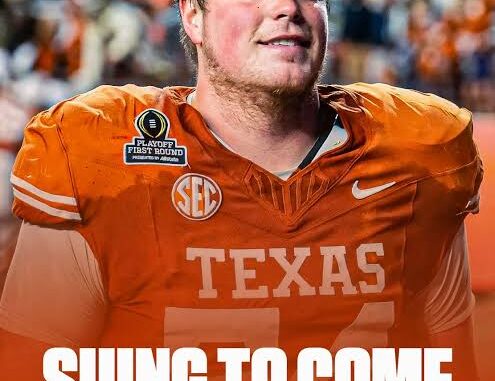
Cole Hutson Takes NCAA to Court in Bid for One More Season at Texas
Former Texas Longhorns offensive lineman Cole Hutson is making one final push to extend his college football career, taking the NCAA to court in a high-profile eligibility lawsuit that could have implications well beyond Austin. After exhausting what was believed to be his collegiate eligibility and briefly pursuing an NFL opportunity, Hutson is now seeking the chance to return to Texas for the 2026 season through legal action.
The lawsuit has quickly become one of the most talked-about stories in college football, highlighting the ever-changing landscape of NCAA eligibility rules and the increasing number of athletes turning to the courts when they believe current regulations unfairly affect their careers. Hutson’s case is centered on the NCAA’s revised eligibility policies, which he argues should also benefit players from his recruiting class.
Hutson was a key member of Steve Sarkisian’s program during his time in Austin. Over four seasons, he appeared in 48 games and started 23 contests, showcasing his versatility by playing both guard and center. Coaches consistently praised his football intelligence, toughness, and willingness to fill multiple roles along the offensive line whenever injuries or lineup adjustments required it. His reliability made him an important contributor during one of Texas’ most successful stretches in recent history.
Following the conclusion of the 2025 season, Hutson entered the 2026 NFL Draft hoping to begin his professional career. Although he went undrafted, he participated in rookie minicamp with the Dallas Cowboys in an effort to earn an opportunity at the next level. Despite that experience, he has now shifted his focus back to college football, believing he still has unfinished business with the Longhorns.
At the heart of Hutson’s lawsuit is his argument that recent NCAA eligibility changes have created an uneven playing field for athletes from different recruiting classes. His legal filing contends that newer rules effectively grant benefits to some student-athletes while excluding players like him, despite their careers unfolding during a period of significant NCAA policy changes.
According to the lawsuit, Hutson believes he deserves an additional season because the NCAA’s revised framework should not arbitrarily separate athletes based solely on the year they entered college. His legal team argues that denying him another season limits not only his athletic opportunities but also his ability to continue developing as a player, pursue graduate education, and potentially benefit from Name, Image and Likeness opportunities that are now a major part of modern college athletics.
In a significant early victory, Hutson secured a temporary restraining order from a Travis County court. The ruling temporarily allows him to resume football-related activities while the broader legal dispute continues. Although the restraining order does not guarantee that he will ultimately receive another year of eligibility, it represents an important step in his effort to continue playing college football.
The temporary ruling immediately sparked speculation about a possible reunion between Hutson and the Longhorns. Texas is preparing for another season with high expectations in the SEC, and adding an experienced offensive lineman could provide valuable depth and leadership for a roster with championship aspirations.
Veteran offensive linemen are among the most valuable assets in college football, especially players who already understand a team’s offensive system and locker-room culture. Hutson’s experience could allow him to contribute immediately if he ultimately becomes eligible to return.
However, several questions remain unanswered. Legal experts and college football analysts note that winning the lawsuit—or even obtaining temporary relief—does not automatically guarantee that Hutson will suit up for Texas this fall. Additional hearings are expected, and there are still procedural questions regarding roster status and NCAA compliance that must be resolved before any return becomes official.
Texas head coach Steve Sarkisian has acknowledged the situation publicly while making it clear that the university is monitoring the legal process. Sarkisian recognized that eligibility lawsuits have become increasingly common as college athletics continues evolving through NIL, transfer portal reforms, and ongoing legal challenges to longstanding NCAA regulations.
The Hutson case also reflects a broader trend across college sports. In recent years, athletes have increasingly challenged NCAA rules in court, often arguing that older eligibility restrictions fail to keep pace with the rapidly changing landscape of collegiate athletics. Court decisions have repeatedly reshaped transfer rules, NIL regulations, and athlete rights, leading many observers to believe that eligibility policies could face additional legal scrutiny in the years ahead.
Supporters of Hutson argue that allowing him another season would simply recognize the unique transition period college athletics is currently experiencing. They believe athletes whose careers overlapped with major rule changes should not be disadvantaged because of when they enrolled.
Others, however, believe the NCAA has to maintain clear eligibility standards. They argue that continually extending playing careers through litigation could complicate roster management, scholarship distribution, and competitive balance across college football.
Regardless of which side ultimately prevails, Hutson’s lawsuit has become another example of how dramatically the NCAA’s authority has changed over the past several years. Issues that once would have been settled internally are now frequently being decided in courtrooms, with judges increasingly playing a role in shaping the future of college sports.
For Texas fans, the possibility of Hutson returning brings understandable excitement. His familiarity with the program, combined with years of experience competing against elite competition, could provide valuable insurance for an offensive line expected to protect one of the nation’s most talented offenses.
Still, optimism remains tempered by uncertainty. The temporary restraining order is only an initial legal victory, and the final outcome will depend on future court proceedings and any subsequent NCAA response. Until a final decision is reached, Hutson’s playing status remains unresolved.
Whether Cole Hutson ultimately returns to the Texas Longhorns or not, his lawsuit has already become one of the defining off-the-field stories of the 2026 college football offseason. It underscores how rapidly the NCAA’s rules continue to evolve and how determined athletes have become to challenge policies they believe are outdated or unfair. As the legal battle moves forward, coaches, players, administrators, and fans across the country will be watching closely, knowing that the outcome could influence future eligibility cases far beyond the Texas football program.
Leave a Reply