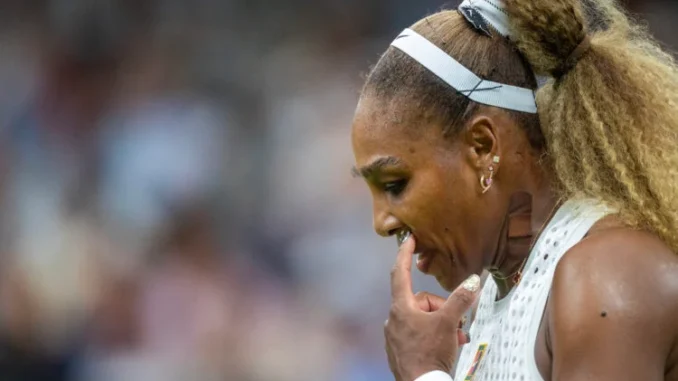
Serena Williams’ highly anticipated return to singles tennis at Wimbledon captured the attention of the sporting world, but former American tennis star Sam Querrey believes one major issue stood out more than anything else during the legendary champion’s comeback.
After nearly four years away from Grand Slam singles competition, Williams stepped back onto Centre Court at Wimbledon, where she has built one of the greatest legacies in tennis history. The seven-time Wimbledon singles champion received a standing ovation from thousands of fans eager to witness another chapter in her remarkable career. Although the 23-time Grand Slam singles champion displayed flashes of the brilliance that made her one of the greatest athletes of all time, her return also highlighted the physical demands of competing at the highest level once again.
Speaking after the match, Querrey pointed to movement around the court as the biggest obstacle Serena now faces. According to the former Wimbledon semifinalist, Williams’ power, serve and competitive mentality remain elite, but covering the court consistently against younger opponents has become a much greater challenge.
Throughout the match, Serena reminded everyone why she dominated women’s tennis for more than two decades. Her powerful first serve repeatedly earned free points, while her trademark groundstrokes still carried tremendous pace and accuracy. Even after dropping the opening set, she demonstrated her trademark resilience by saving a match point and battling back to force a deciding third set.
It was a vintage display of determination that has defined Williams’ illustrious career.
However, Querrey noted that modern singles tennis demands exceptional movement from baseline to baseline, especially against younger players capable of extending rallies and forcing opponents to cover every corner of the court. While Serena’s shot-making ability remains world-class, recovering between points and sustaining that movement over a long three-set match is a completely different challenge after such a lengthy absence from singles competition.
That assessment became increasingly evident as the match progressed. Serena continued producing spectacular winners and serving with authority, but longer rallies often favored her younger opponent. The physical intensity required to maintain that level throughout the contest eventually became one of the deciding factors.
Williams’ return itself was already viewed as an extraordinary achievement. At 44 years old, simply competing in a Grand Slam singles draw after years away from professional singles competition is something few athletes have attempted, let alone on one of tennis’ biggest stages.
Fans around the world celebrated her comeback regardless of the final score. Centre Court erupted several times as Serena produced trademark aces, powerful forehand winners and clutch moments that reminded everyone why she has inspired generations of tennis players.
Querrey was quick to acknowledge that Serena’s biggest strengths remain intact. He praised her serving ability, saying it continues to rank among the best in women’s tennis. He also highlighted her unmatched competitive spirit, explaining that Williams never stops believing she can win, regardless of the scoreline.
That fighting mentality was on full display throughout the match. Rather than fading after losing the first set, Serena raised her intensity, found another level and forced the contest into a deciding set, thrilling spectators who hoped to witness another unforgettable Wimbledon comeback.
Still, Querrey believes movement is ultimately the deciding factor in today’s women’s game. The current generation features incredibly athletic players capable of retrieving difficult shots and turning defense into offense almost instantly. Against opponents nearly half her age, Serena must consistently cover more ground while also protecting her body from injury.
The challenge becomes even greater considering the lack of recent singles match experience. Doubles competition requires different movement patterns and less court coverage, while singles places constant physical demands on every point. Returning directly to Grand Slam singles competition after several years away was always expected to test Serena’s fitness as much as her tennis skills.
Despite the defeat, many analysts agreed there were far more positives than negatives to take from her performance. Williams showed she can still compete at a remarkably high level, especially when her serve is firing and her confidence grows during a match.
Her return also served as an emotional moment for tennis fans who have followed her extraordinary career from its beginnings. The atmosphere inside Centre Court reflected the immense respect Serena has earned through decades of excellence, perseverance and championship success.
Beyond the statistics, her comeback represented something larger than one result. It symbolized resilience, determination and the willingness to challenge herself once again against the world’s best players.
Whether Serena continues competing in singles beyond Wimbledon remains one of the biggest questions surrounding her return. If she chooses to play more tournaments, additional match fitness and competitive rhythm could naturally improve some of the movement concerns highlighted by Querrey.
At the same time, balancing singles and doubles competition while managing her physical condition will likely play a significant role in any future decisions. Experience can compensate for many things, but the physical demands of elite singles tennis remain relentless.
Regardless of what comes next, Serena Williams once again reminded the sporting world why she remains one of the most influential figures in tennis history. Her presence alone elevated the tournament, drew worldwide attention and inspired countless fans watching around the globe.
Sam Querrey’s analysis wasn’t meant as criticism but rather an honest evaluation of what separates winning from losing at the highest level. In his view, Serena’s legendary power and mentality remain championship-caliber, but improving movement across the court will be the key if she hopes to make another deep singles run against today’s younger generation.
Even in defeat, Williams proved that champions never lose their fighting spirit. Her Wimbledon return offered moments of brilliance, emotional memories and hope that tennis fans may not have seen the last of one of the greatest competitors the sport has ever known. Her comeback ended in a first-round loss to Australia’s Maya Joint, but it also demonstrated flashes of the quality that defined her legendary career while underscoring the physical challenge of returning to Grand Slam singles after such a long absence.
Leave a Reply