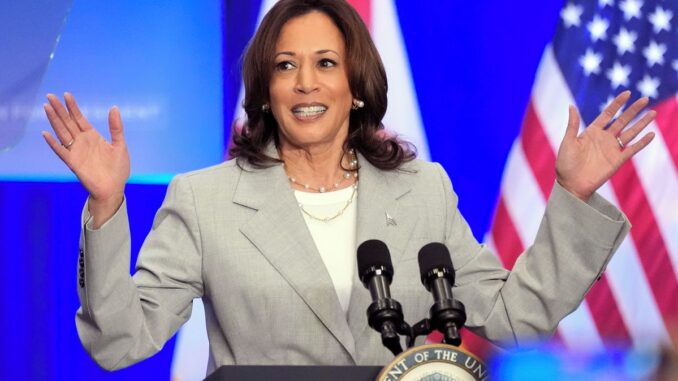
Nearly two years after her defeat in the 2024 presidential election, former Vice President Kamala Harris is speaking more openly about one of the most challenging moments of her political career. While acknowledging the disappointment of the election outcome, Harris has also made it clear that she has not ruled out another run for the White House, fueling renewed speculation about her potential role in the 2028 presidential race.
In recent interviews and public appearances, Harris has struck a careful balance between reflection and optimism. Rather than dwelling solely on the loss, she has emphasized the importance of resilience, democratic participation, and remaining engaged in public life. At the same time, she has stopped short of making any formal announcement about her future political plans, choosing instead to leave every option on the table.
Her comments have quickly attracted attention from political observers across the country, many of whom view Harris as one of the Democratic Party’s most recognizable national figures. Although the party is expected to have several high-profile contenders if the 2028 race takes shape, Harris remains a central figure whose decisions could significantly influence the direction of the Democratic primary.
The 2024 election marked a defining chapter in Harris’ political career. After securing the Democratic nomination following President Joe Biden’s withdrawal from the race, she entered the general election facing enormous expectations and unprecedented circumstances. Her campaign sought to build on the Biden administration’s record while presenting a vision focused on economic opportunity, reproductive rights, voting protections, and defending democratic institutions.
Despite an energetic campaign that drew large crowds and strong support from Democratic voters, Harris ultimately lost the election to Donald Trump. The defeat was disappointing not only for her campaign but also for many Democrats who had hoped to retain the White House.
Following the election, Harris delivered a concession speech that emphasized unity, respect for democratic institutions, and the peaceful transfer of power. She urged supporters not to lose faith in the political process, arguing that setbacks should inspire greater civic participation rather than discouragement.
Those themes continue to shape her public message today.
In discussing the loss, Harris has acknowledged that electoral defeats are difficult for any candidate. Campaigns require years of preparation, countless hours on the road, and the commitment of thousands of staff members, volunteers, and supporters. She has expressed gratitude to everyone who contributed to the campaign while recognizing that the result was not what they had hoped for.
Rather than portraying the election as the end of her public service, Harris has framed it as one chapter in a much longer commitment to the country. She has repeatedly suggested that leadership is not defined solely by holding elected office but also by continuing to advocate for issues that matter to millions of Americans.
That outlook has fueled speculation about what comes next.
When asked directly whether she intends to seek the presidency again in 2028, Harris has consistently declined to provide a definitive answer. Instead, she has indicated that she is taking time to reflect on both her personal future and the broader political landscape before making any decisions.
Her measured responses have done little to quiet political speculation.
Supporters argue that Harris remains one of the Democratic Party’s strongest national voices. As the first woman, first Black American, and first South Asian American to serve as vice president, she occupies a unique place in modern American political history. Many Democrats believe her experience at the national level would make her a formidable candidate should she decide to enter another presidential campaign.
Others within the party believe the next election could feature an entirely new generation of Democratic leadership. Governors, senators, cabinet officials, and other emerging national figures are widely expected to explore potential campaigns, creating what could become one of the party’s most competitive presidential primaries in decades.
For now, Harris appears comfortable allowing those conversations to unfold without committing herself publicly to any particular course of action.
Political analysts note that former presidential nominees often remain influential voices long after electoral defeats. History has shown that candidates can return to national politics after losing presidential races, particularly when they maintain strong support among their party’s voters.
Harris’ continued visibility reflects that reality.
Since leaving office, she has remained active through speeches, policy discussions, advocacy events, and interviews addressing issues ranging from reproductive rights and voting access to economic opportunity and international affairs. Her willingness to remain engaged has reinforced the perception that she intends to continue playing a significant role in national politics regardless of whether she becomes a presidential candidate again.
Her remarks have also highlighted the importance of perseverance.
Throughout her career, Harris has frequently spoken about overcoming obstacles and remaining committed to long-term goals. That message has resonated again as she reflects on the 2024 election, encouraging supporters not to interpret one electoral loss as the end of broader political movements or public policy debates.
According to Harris, meaningful political change often requires persistence across multiple election cycles. She has pointed to the fact that many landmark achievements in American history were accomplished only after years—or even decades—of sustained advocacy.
That perspective appears to shape her own approach following the defeat.
Rather than focusing exclusively on campaign politics, Harris has emphasized the importance of strengthening democratic institutions, encouraging civic engagement, and supporting future leaders who share similar priorities. Whether speaking to students, community organizations, or national audiences, she has consistently returned to the idea that public service extends beyond elected office.
Still, the question of 2028 continues to follow her.
Every interview that touches on her future inevitably generates fresh headlines as observers search for clues about her intentions. While Harris has acknowledged the interest, she has resisted pressure to make premature decisions, arguing that the appropriate time for such announcements has not yet arrived.
That patience may ultimately benefit both Harris and the Democratic Party. By avoiding an early declaration, she retains flexibility while allowing the political environment to evolve over the coming months and years.
Should she decide to run, Harris would enter the race with significant national recognition, extensive fundraising experience, and one of the most established political networks within the Democratic Party. At the same time, she would likely face strong competition from other prominent Democrats seeking to shape the party’s future.
For now, however, Harris appears focused less on campaign strategy than on reflection, public engagement, and continuing the work she believes remains unfinished.
Her recent comments suggest someone who has accepted the outcome of the 2024 election without allowing it to define her political future. Instead of expressing regret or bitterness, she has emphasized resilience, optimism, and continued public service.
Whether those qualities ultimately lead her back to the campaign trail remains uncertain. What is clear is that Kamala Harris has not closed the door on another presidential bid. As conversations surrounding the 2028 election gradually begin to take shape, her name is expected to remain among the most closely watched in American politics.
For Democrats looking toward the future, Harris’ reflections offer both a reminder of the lessons learned from 2024 and an indication that one of the party’s most recognizable leaders may yet have another chapter to write.
Leave a Reply