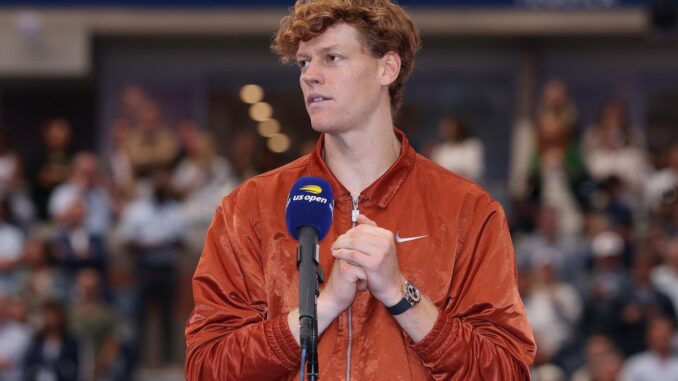
Jannik Sinner Addresses Heartbreaking Roland-Garros Defeat, Focuses on Physical Condition Rather Than Conditions
The pain of defeat was evident, but so was the maturity.
Following one of the most difficult losses of his career at Roland-Garros, Jannik Sinner faced the media with the same composure and professionalism that have become hallmarks of his rise to the top of men’s tennis. While many observers expected questions about the weather, court conditions, and the physical demands of a grueling match under challenging circumstances, the Italian star chose a different path.
Rather than pointing to the heat as an explanation for the outcome, Sinner calmly redirected attention toward his own physical condition and the realities of competing at the highest level of the sport.
It was a response that reflected both accountability and perspective.
For a player who has spent the past few years establishing himself as one of the brightest talents in tennis, the defeat was undoubtedly painful. Roland-Garros represented another opportunity to add a major title to his growing résumé, and expectations surrounding him were enormous.
Yet even in disappointment, Sinner demonstrated why he is widely respected throughout the tennis world.
A Tough Loss on One of Tennis’ Biggest Stages
Few tournaments carry the weight and prestige of Roland-Garros.
Every year, the clay courts of Paris become the stage for some of the sport’s most dramatic moments, testing players physically, mentally, and emotionally. Success at the French Open requires patience, endurance, and the ability to withstand long rallies and extended battles.
For Sinner, the tournament represented another chance to solidify his position among the elite players in the game.
Throughout the event, he displayed the powerful baseline game, movement, and competitive spirit that have helped elevate him to the top tier of men’s tennis. Match after match, he looked capable of making a deep run and potentially lifting the trophy.
But as is often the case at Grand Slam tournaments, the margins between victory and defeat were razor-thin.
When the final points were played, Sinner found himself on the losing side of a result that was difficult to accept.
Refusing to Make Excuses
One of the first topics raised after the match was the challenging weather conditions.
High temperatures and physically demanding rallies can significantly impact players during long matches, particularly on clay courts where points tend to last longer and movement requires tremendous energy.
Many athletes in similar situations might have pointed to the heat as a contributing factor.
Sinner chose not to.
Instead, he shifted the conversation toward his own physical state and the demands of elite competition.
That decision was notable because it reflected a mindset that has become increasingly common among the sport’s top competitors. Rather than searching for external explanations, Sinner focused on what he could control and what he could learn from the experience.
His comments suggested that while conditions affect everyone on the court, the more important issue was understanding how his body responded during key moments of the match.
The Physical Demands of Modern Tennis
Modern tennis places extraordinary demands on athletes.
The speed of the game has increased dramatically over the years. Players are stronger, faster, and more athletic than ever before. Grand Slam tournaments often require competitors to endure multiple physically demanding matches over a two-week period.
For someone like Sinner, whose game relies heavily on explosive movement, powerful groundstrokes, and relentless intensity, maintaining peak physical condition is essential.
Every small detail matters.
Recovery sessions, nutrition, sleep, fitness work, and injury prevention all play crucial roles in determining whether a player can perform at their best during the biggest matches.
Sinner’s willingness to discuss his physical condition highlighted the reality that success at the highest level is not simply about talent. It is also about managing the body through the long and demanding tennis calendar.
Even the world’s best players face moments when their physical limits are tested.
A Sign of Growing Maturity
What stood out most about Sinner’s post-match remarks was his maturity.
Defeats of this magnitude can be emotionally draining. Players invest months of preparation into Grand Slam events, and the disappointment of falling short can be difficult to process.
Yet Sinner’s approach was measured and thoughtful.
There was no frustration directed at external circumstances. No complaints about conditions. No attempt to diminish the achievement of his opponent.
Instead, he spoke like a player focused on growth.
That attitude has become one of the defining characteristics of his career.
Since emerging as one of the sport’s most promising young talents, Sinner has consistently demonstrated a calm and professional demeanor. Whether celebrating victories or dealing with setbacks, he rarely allows emotions to overwhelm his perspective.
Those qualities have earned him admiration from fans, fellow players, and analysts alike.
Learning From Defeat
The greatest champions often view losses differently than everyone else.
While defeats hurt, they also provide valuable lessons.
For Sinner, Roland-Garros may ultimately serve as another important step in his development. Every difficult match reveals areas for improvement, whether physical, tactical, or mental.
The experience of competing deep into major tournaments helps players better understand what is required to win them.
Sinner’s comments suggested that he is already approaching the loss from that perspective.
Rather than dwelling solely on disappointment, he appears focused on identifying ways to become stronger moving forward.
That ability to turn setbacks into motivation is one of the reasons many believe his best years are still ahead of him.
The Road Ahead
Despite the heartbreak of Roland-Garros, there is little reason to believe this defeat will define Sinner’s season.
At a relatively young age, he has already established himself among the world’s elite players and remains a serious contender whenever he steps onto the court.
His combination of power, consistency, athleticism, and mental toughness makes him a threat on every surface.
More importantly, his attitude continues to set him apart.
The willingness to accept responsibility, analyze performance honestly, and move forward without excuses is a trait shared by many of the sport’s greatest champions.
Looking Beyond Paris
As the tennis calendar moves forward, attention will quickly shift to upcoming tournaments and new opportunities.
For Sinner, the challenge now is to take the lessons learned in Paris and apply them to future competitions.
The disappointment of Roland-Garros will undoubtedly linger for some time. Losses on the biggest stages always do.
But if his post-match comments revealed anything, it is that Sinner remains focused on the bigger picture.
Rather than blaming conditions or searching for excuses, he chose to confront the reality of the situation with honesty and maturity.
That response may not erase the pain of defeat, but it reinforces why so many believe he has the mindset necessary to achieve even greater success in the years ahead.
In a sport where resilience often determines greatness, Jannik Sinner’s reaction to disappointment may ultimately say as much about his future as any victory ever could.
Leave a Reply